
Chandigarh Housing Board Homes Face Policy Uncertainty as Old Construction Rules Keep Changing
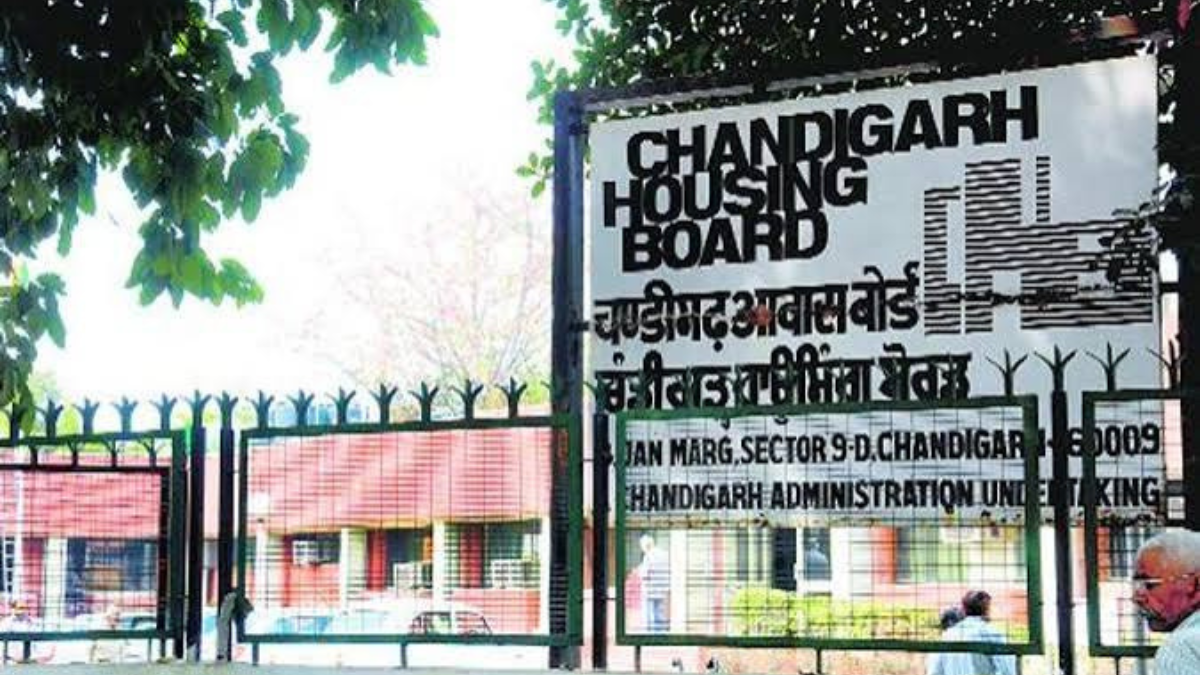
Chandigarh | August 11, 2026: For thousands of Chandigarh Housing Board (CHB) residents, a home alteration that was once allowed could now become a source of notices, penalties or even demolition concerns.
More than 3 lakh people living in nearly 66,000 CHB homes are facing uncertainty as repeated changes in need-based construction policies have created disputes over alterations made under earlier rules.
Residents say the bigger problem is not simply unauthorised construction. They argue that changes permitted under an earlier policy are being treated as violations after newer policies replace those rules, leaving homeowners to defend work that was legal when it was carried out.
Why are CHB homeowners worried?
Residents' groups estimate that around 90% of CHB houses have some form of building deviation.
According to them, successive changes in need-based policies over the years have made the situation more complicated. A construction concession available under one policy may disappear in a later notification, after which the same structure can be questioned.
This has reportedly resulted in notices, financial liabilities, demolition concerns and prolonged legal disputes for some homeowners.
Old permissions becoming today's violations
One of the examples cited by residents involves projections and balconies in front of MIG duplex houses.
These were permitted under the May 18, 2001 policy and continued through notifications issued in 2010, 2015 and 2016. The concession was later withdrawn under policies issued in 2018 and January 2023.
Residents argue that alterations carried out during the period when the concession was valid should not subsequently be treated as violations.
For homeowners, the issue is particularly important because proving exactly when an alteration was made can become difficult years after the construction.
Residents want protection for earlier legal changes
Residents' associations have suggested that CHB should consider accepting affidavits from homeowners stating when an alteration was carried out.
Their argument is that many residents may not possess formal acknowledgements or old documents proving that the construction was undertaken when the relevant concession was in force.
They believe a clear cut-off date and protection for previously permitted constructions could provide greater certainty to homeowners.
CHB says it needs proof of when alterations were made
CHB officials have acknowledged the difficulty but said the Board currently does not have a reliable mechanism to determine when a particular alteration was carried out.
As a result, notices are issued where deviations are identified.
Officials said that if an allottee can establish that the construction was undertaken during a period when it was permitted, the case can be considered accordingly.
Residents question retrospective policy changes
The dispute has also moved into the legal domain.
Residents' representatives have questioned whether revised policies can retrospectively impose new liabilities on homeowners or remove rights that existed when construction was undertaken.
They have cited Supreme Court judgments in support of their argument that delegated legislation generally cannot retrospectively impose new burdens or adversely affect accrued rights without clear statutory authority.
The issue, therefore, is no longer simply about balconies, extensions or building deviations. It is about whether homeowners should continue to be protected by the rules that were applicable when they carried out a permitted construction.
CHB working on a new policy
There may be some relief ahead.
Shakti Prakash Devshali, a non-official member of the CHB Board of Directors, said the retrospective application of policies had become a major concern for allottees.
He said the issue had been raised in Board meetings and that future policies should operate prospectively, with grandfathering provisions to protect existing rights.
Senior UT administration and CHB officials have reportedly indicated that these concerns will be addressed through a comprehensive need-based changes policy.
Why the new policy could matter to thousands of families
For CHB homeowners, clarity could be as important as any relaxation in construction rules.
A consistent policy could help residents understand what changes are allowed, protect alterations that were legally made under earlier rules and reduce the possibility of years-old constructions becoming a sudden compliance issue.
The Chandigarh administration has also informed the Ministry of Housing and Urban Affairs that need-based changes in CHB dwelling units have already been permitted through CHB orders dated January 3, 2023 and March 10, 2026.
The next policy framework will therefore be closely watched by CHB residents, particularly those whose homes contain alterations made under previous regulations.