
Rolleston Growth Raises Questions About New Zealand’s Urban Planning
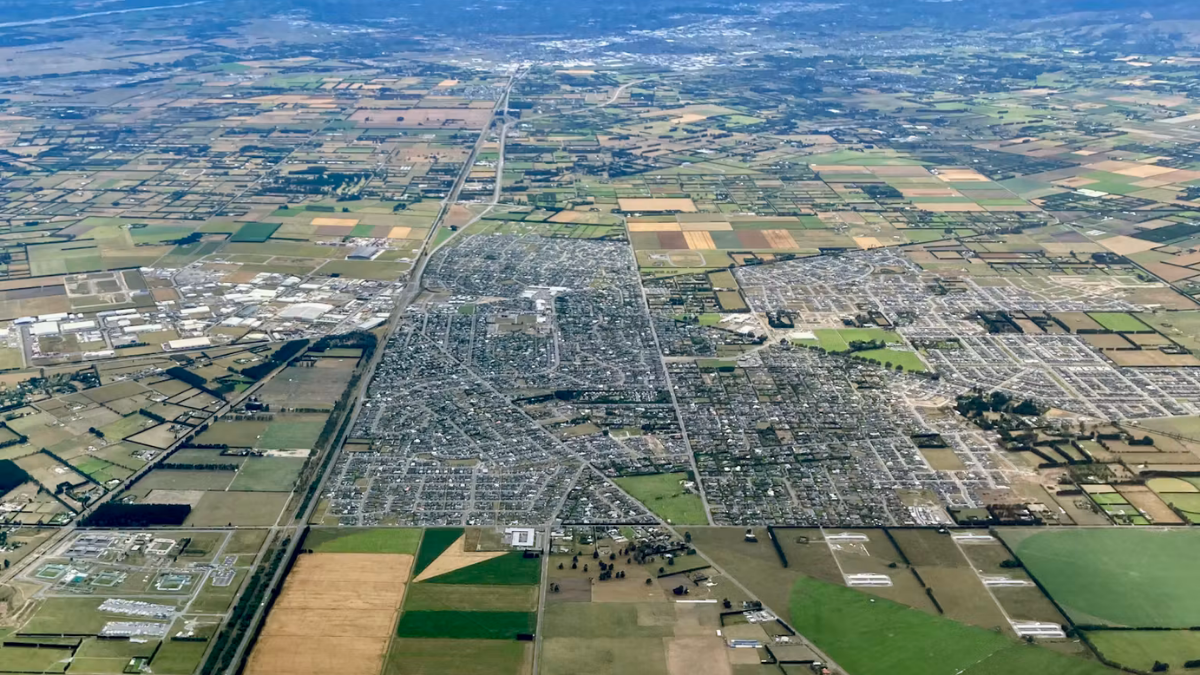
ROLLESTON, NEW ZEALAND, August 29, 2026: Rolleston, once envisioned as a carefully planned “town of the future”, has become New Zealand’s fastest-growing town, with its rapid expansion highlighting the challenges of car-dependent urban development.
Located around 25 km south of Christchurch, Rolleston now has a population of more than 34,000, with projections suggesting it could reach 50,000 by 2050. Between 2000 and 2025, its population increased by around 1,246%.
A Different Vision in the 1970s
Rolleston's original development plan was announced in 1973, when the government purchased around 10,000 acres of land to create a planned town for up to 50,000 people.
The vision was to reduce pressure on Christchurch while creating a largely self-sufficient community with its own jobs, housing, recreation and public services.
Plans also focused on affordable housing, walking and cycling, public transport, sustainable energy and water systems, and a diverse local economy.
How the Vision Changed
The original plan was abandoned after a change in government in 1975. Over subsequent decades, development became increasingly driven by private real estate interests and market demand.
Instead of becoming a largely self-contained town, Rolleston has developed into a major commuter settlement. According to the 2023 census, around 52.9% of residents commute to Christchurch for work, while only 32.4% both live and work in Rolleston.
Infrastructure Struggles to Keep Pace
Rapid population growth has created pressure on infrastructure and public services. Rolleston now has eight schools, two sports centres and a major library, community and cultural centre, but residents continue to face gaps in services.
After-hours medical care has recently expanded, although the town does not have a hospital providing emergency services.
Traffic congestion is also increasing, while big-box retail and large parking areas have reinforced the town's dependence on cars.
Why Rolleston Matters for Future Cities
Rolleston's experience offers a wider lesson for urban planners. Fast housing development can increase supply and population quickly, but without jobs, public transport, healthcare, green spaces and resilient infrastructure, communities can become dependent on nearby cities.
With climate change increasing the need for resilient urban development, Rolleston's original planning principles could offer useful lessons for future housing and town expansion.
What Happens Next
Further housing and infrastructure development is expected as Rolleston continues to grow. The debate now is whether future expansion can move beyond car-dependent suburban growth and create a more self-sufficient, connected and sustainable urban community.
For cities planning large-scale housing expansion, Rolleston demonstrates why building homes alone may not be enough—the supporting economy, transport network, public services and environment need to grow alongside them.