
Tamil Nadu to Digitise Land-Use Approvals and Raise Building Approval Limits
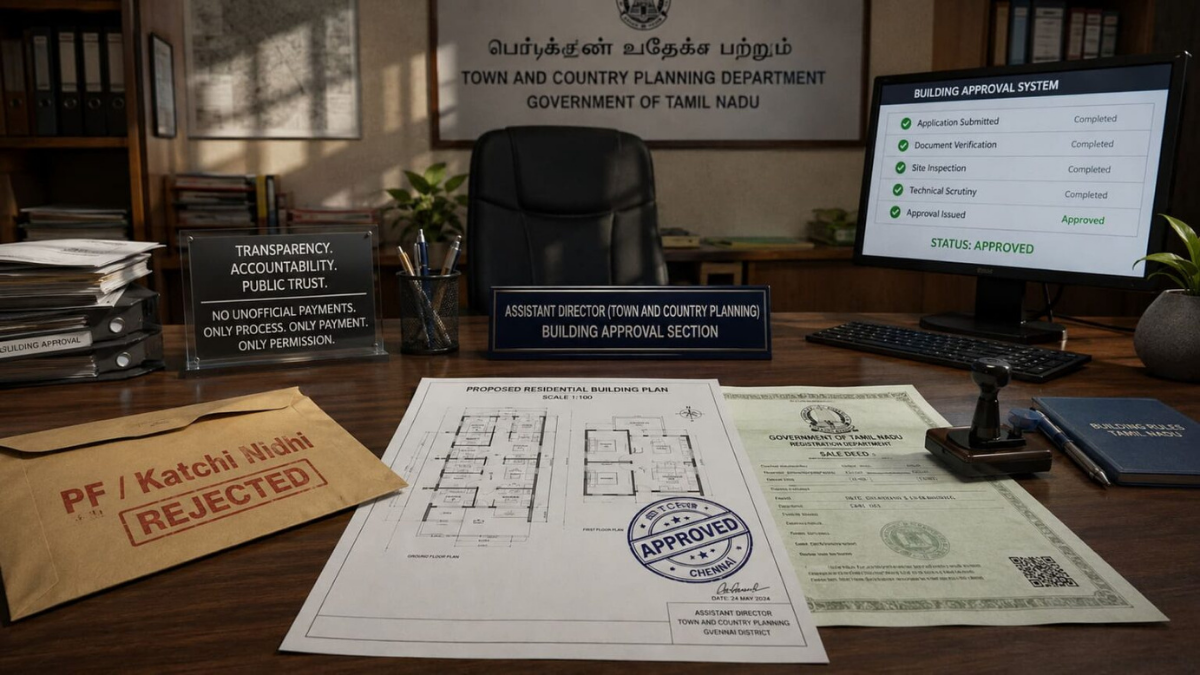
Chennai, August 29, 2026: Tamil Nadu is set to introduce major reforms in land-use approvals, building permissions and urban housing, with the state government planning to digitise applications and expand self-certification to speed up approvals.
Land-Use Change Process to Go Digital
The Directorate of Town and Country Planning will digitise the complete land-use change application process. The government also plans to simplify the reclassification of wet agricultural land in non-planned areas through multi-departmental clearances.
Higher Limits for Self-Certification
Self-certification will be expanded to residential buildings of up to 5,000 sq ft and small commercial buildings of up to 1,500 sq ft.
Third-party certification will cover:
- Residential buildings up to 8,070 sq ft
- Commercial buildings up to 3,230 sq ft
- Industrial structures up to 26,900 sq ft in approved SIDCO, SIPCOT and ELCOT layouts
Local bodies will also receive higher approval powers. Residential approval limits will rise to 16,140 sq ft for corporations and municipalities and 12,912 sq ft for town and village panchayats. Commercial approval limits for all local bodies will increase to 5,380 sq ft.
12,648 Dilapidated Flats to Be Rebuilt
The Tamil Nadu Urban Habitat Development Board plans to reconstruct 12,648 dilapidated flats across 20 project areas at a cost of ₹2,882.62 crore.
The first phase will involve demolition of 9,918 unsafe units.
Another 41,664 old flats will be renovated with an allocation of ₹96.63 crore, while ₹355 crore will be spent on civic infrastructure upgrades across 208 housing sites.
Interest Relief for Housing Borrowers
The government also plans an interest-waiver scheme for borrowers who have defaulted on loans from primary cooperative housing societies. LIG and MIG borrowers will receive an additional one percentage point interest waiver.
Why It Matters
The reforms could make building approvals faster and reduce procedural delays for property owners and developers. At the same time, the reconstruction and renovation programme could improve living conditions for thousands of families living in ageing housing projects.
Grihik Takeaway: For property owners and developers in Tamil Nadu, higher approval limits and digital land-use applications could mean fewer procedural hurdles, while the housing redevelopment measures could significantly improve ageing residential communities.