
28 Liberty Starts 200,000 Sq Ft Retail Redevelopment in Lower Manhattan
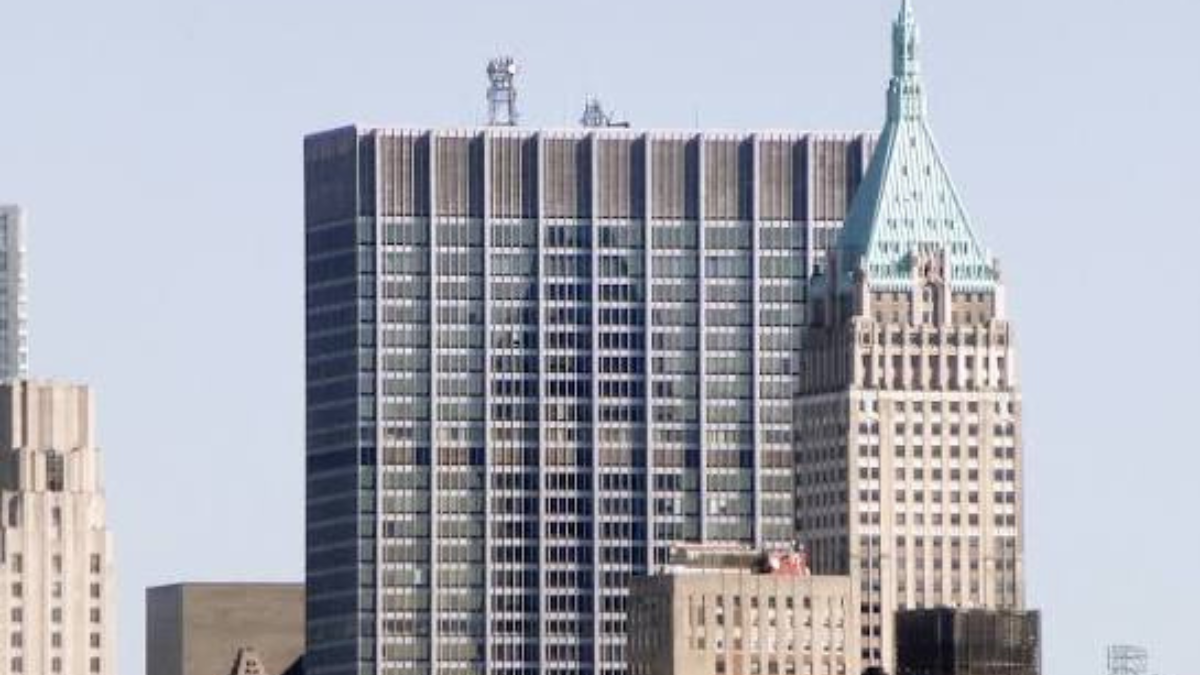
New York, USA | September 25, 2026: Lower Manhattan’s retail landscape is set for a major change as work begins on roughly 200,000 square feet of retail space at 28 Liberty, one of the area’s prominent office and mixed-use properties. The redevelopment includes demolition work and plans to replace portions of the building’s street-level black granite frontage with glass facades.
For property owners, retailers and investors, the project is significant because it aims to reposition a large retail footprint at a time when Manhattan’s storefront market is seeing both renewed tenant demand and continued vacancies.
What Changed at 28 Liberty
Demolition is now underway as part of the planned retail overhaul at 28 Liberty.
According to the property, the work will include:
- Redevelopment of approximately 200,000 sq ft of retail space
- Replacement of portions of the existing black granite street-level walls with glass facades
- Changes to the building’s plaza
- Adaptive reuse of the plaza with ground-floor retail and other improvements
The Landmarks Preservation Commission has approved the proposal for the adaptive reuse of the plaza, according to the property.
Why the Retail Space Matters
A 200,000 sq ft retail redevelopment is substantial for Lower Manhattan. Opening up more visible street-level frontage and changing the relationship between the building, plaza and surrounding streets could alter how the property is experienced by pedestrians and potential retail tenants.
For retailers, visibility and accessibility can be important factors when assessing large urban locations. For property owners, the redevelopment shows how older large-scale properties can be repositioned through changes to their ground-floor retail environment.
Court 16 Adds a 7,000 Sq Ft Retail Tenant
Separately, Court 16 has leased approximately 7,000 sq ft at 28 Liberty.
The available information identifies the transaction as a lease and does not indicate that it represents an expansion by the tenant.
The lease provides a concrete example of retail or consumer-oriented activity taking place at the property while its broader retail redevelopment moves forward.
Manhattan Retail Market Remains Mixed
The 28 Liberty redevelopment comes as Manhattan's retail market shows signs of improving demand but still faces vacancies and pricing pressure in several locations.
A Real Estate Board of New York survey cited by the New York Post found demand from international luxury brands, expanding local businesses, food-and-beverage operators and health-and-fitness tenants.
At the same time, average asking rents remained 32% below their peaks from the previous decade, while Herald Square had 25 vacant storefronts and saw average asking rents decline 14%, according to the report.
These figures describe broader Manhattan conditions and should not be treated as forecasts for 28 Liberty's future leasing performance.
What It Means for Property Owners and Retailers
The project could be relevant to property owners watching how major Manhattan assets are being repositioned.
Key factors to watch include:
- Whether the redesigned frontage improves pedestrian visibility
- How much of the 200,000 sq ft retail area is ultimately leased
- Which retail categories are attracted to the property
- Whether the plaza changes increase foot traffic
- How the redevelopment affects the surrounding Lower Manhattan retail environment
For retailers, the project could create additional opportunities for large-format or experiential concepts, although actual tenant demand will depend on leasing terms, location economics and completed project conditions.
What Happens Next
Construction and demolition work will continue as 28 Liberty moves toward its planned retail transformation.
The next major indicators will be the pace of redevelopment, additional tenant announcements and the eventual mix of businesses occupying the revamped retail areas.
For Lower Manhattan property watchers, the project offers a clear example of how a major commercial property is using retail repositioning and public-facing improvements to adapt its asset to changing tenant and consumer demand.