
Delhi Orders Safety Audit of Pre-2001 High-Rises With Three-Month Deadline
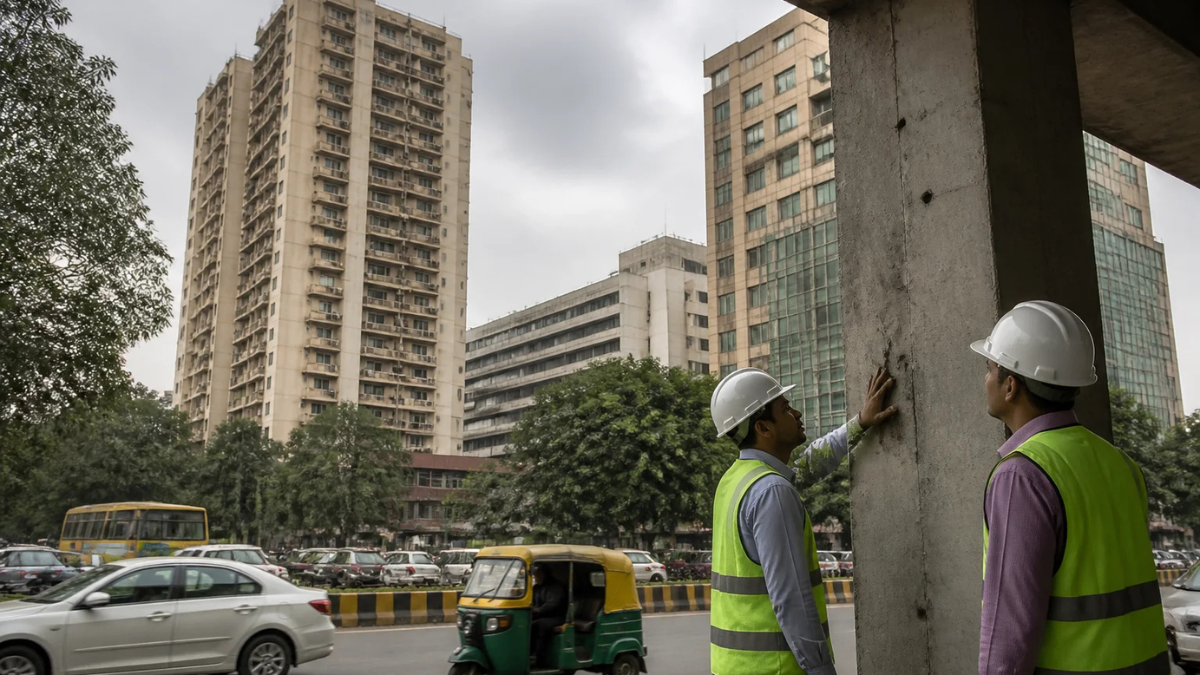
New Delhi | September 25, 2026: Owners of older high-rise buildings in Delhi now face a three-month deadline for mandatory structural safety audits after the Delhi Development Authority (DDA) ordered assessments of buildings constructed under sanctions issued before March 21, 2001.
The requirement covers residential and commercial properties as well as malls, hospitals, educational and institutional buildings. Importantly, certain buildings below the 15-metre threshold will also have to undergo an audit if they have high footfall.
The move could require owners of older properties to undertake structural assessments and, where necessary, fund retrofitting or other corrective work.
Which Buildings Must Undergo the Audit
According to the DDA public notice, mandatory structural audits apply to high-rise buildings measuring 15 metres or more where the building was sanctioned before March 21, 2001.
Owners have three months to complete the assessment.
The order covers a broad range of properties, including:
- Group housing buildings
- Malls and commercial buildings
- Hospitals
- Educational buildings
- Institutional structures
- Cinema halls
- Assembly buildings
The requirement is therefore not limited to conventional residential towers.
Buildings Below 15 Metres Can Also Be Covered
The height threshold does not automatically exempt older buildings.
The DDA has specifically included structures below 15 metres if they experience heavy footfall.
This includes buildings such as group housing, hospitals, educational and institutional facilities, cinema halls and assembly buildings.
For property owners, this means the building's use and occupancy can be as important as its physical height when determining whether an audit is required.
Why Delhi Is Tightening Structural Checks
The DDA's order comes amid several recent building-collapse incidents in Delhi that resulted in fatalities.
The notice referred to structural safety concerns following such incidents, including a collapse in Satya Niketan in South Delhi that killed seven people.
Other recent incidents were reported in Saidulajab and Karawal Nagar.
The authorities are also considering Delhi's earthquake vulnerability. The capital falls under Seismic Zone IV, which has relatively high seismic activity because of its proximity to the Himalayan region.
Who Can Conduct the Structural Audit
The DDA has said structural safety assessments can be conducted by eligible structural engineers empanelled with:
- Municipal Corporation of Delhi
- Government institutes
- Other government agencies
Property owners therefore need to ensure that the engineer or institution conducting the assessment falls within the categories specified by the authorities.
The audit is intended to establish whether the structure meets required safety standards and whether corrective intervention is necessary.
Audit Could Lead to Retrofitting Work
Completing the structural audit will not necessarily end the owner's obligations.
Where deficiencies are identified, the DDA has directed owners to undertake retrofitting and other corrective measures.
This could translate into additional costs for owners of older buildings, particularly where structural strengthening or major repairs are required.
For housing societies and commercial property owners, the audit therefore needs to be viewed as the first step rather than the final compliance requirement.
What Property Owners Should Do Now
Owners of potentially covered buildings should first establish whether their property falls within the DDA's criteria.
Key records to verify include:
- Original building sanction date
- Building height
- Approved building plans
- Current use of the property
- Occupancy and footfall
- Structural modification history
- Previous structural assessments
- Records of major repairs or alterations
Owners of high-footfall buildings below 15 metres should also check the order rather than assuming that the height exemption applies.
What Happens After the Three-Month Deadline
Once the structural audit is completed, owners will have to address deficiencies identified by the assessment through appropriate corrective or retrofitting measures.
The DDA has warned that action will be taken in cases of non-compliance.
The latest directive also comes against the backdrop of wider efforts to improve earthquake resilience in Delhi. The Public Works Department had earlier directed surveys and retrofitting of essential buildings following the devastating Myanmar earthquake in 2025.
For owners of older Delhi properties, the immediate priority is therefore to determine whether the building falls under the DDA's pre-2001 criteria and complete the required structural assessment within the prescribed three-month period.