
Geotechnical Report at Centre of Bengaluru Tower Tilt Investigation as Developer and Consultant Differ
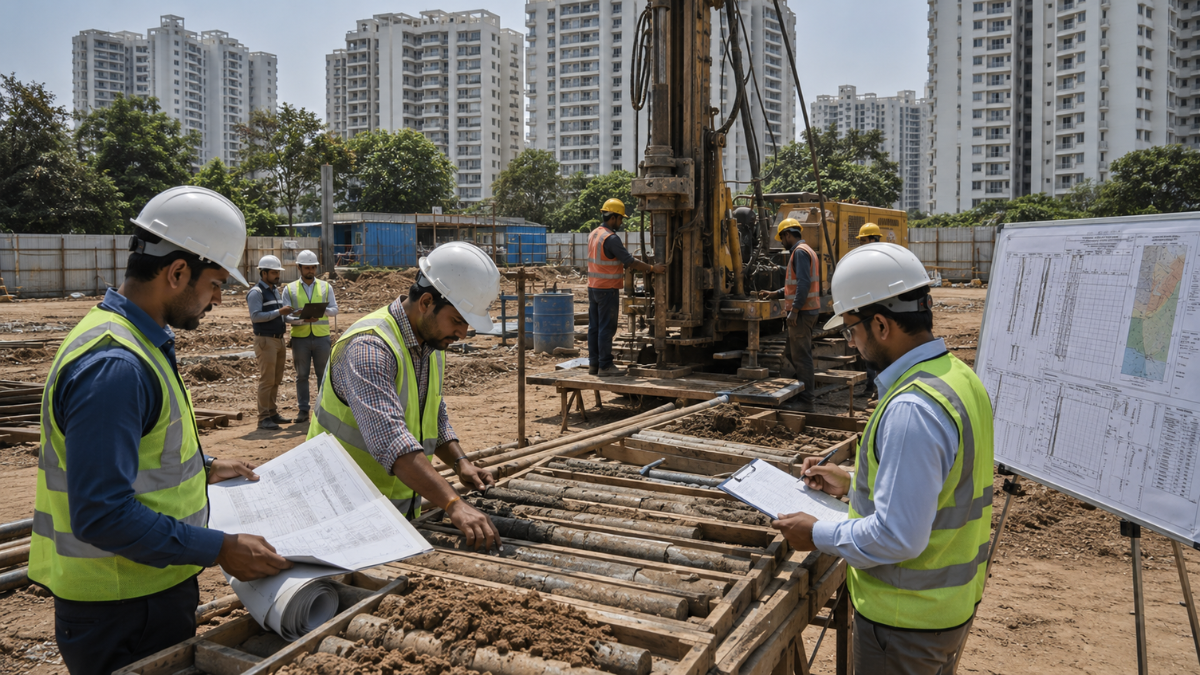
BENGALURU | July 27, 2026: The investigation into the tilted residential tower at SNN Raj Etternia in Bengaluru has entered a technical phase, with differing claims emerging over whether the issue was linked to the geotechnical investigation or the execution of the recommended foundation design.
The discussion now centres on the soil investigation report prepared before construction, as both the developer and the engineering consultant have presented different interpretations of the findings.
Soil Investigation Report Comes Under Scrutiny
The geotechnical study, prepared during the project's planning stage, recorded that parts of the site included previously filled ground, based on information made available during the investigation.
Engineers also identified varying underground conditions across different borehole locations. While competent rock was found at relatively shallow depths in several areas, one section reportedly contained a much deeper layer of filled material before stable rock was encountered.
These findings formed the basis for recommending different foundation systems depending on the soil conditions at each location.
Consultant Says Foundation Advice Was Clear
The engineering consultant has stated that wherever deep filled strata was identified, pile foundations were recommended to ensure structural stability.
According to the consultant, the report also advised further site investigations to determine the full extent of the filled ground.
The firm maintains that following those recommendations in such locations could have reduced the risk of structural distress.
Developer Disputes the Findings
The developer has rejected that explanation, arguing that the geotechnical report itself contained incorrect borehole mapping, which resulted in an unsuitable foundation recommendation for the affected tower.
According to the developer, additional investigations carried out during construction revealed subsurface conditions that differed from those reflected in the original report.
The company has therefore maintained that the dispute relates to the accuracy of the investigation rather than the implementation of the recommendations.
Technical Review Likely to Determine the Cause
With both parties presenting contrasting explanations, the geotechnical report has become a key document in understanding what led to the structural issue.
Any final conclusion is likely to depend on detailed technical examination of soil data, borehole records, foundation design and construction execution.
Meanwhile, the developer has stated that the remaining residential towers within the township continue to be structurally safe.
Why Geotechnical Investigations Matter
A geotechnical investigation is one of the most important stages of any construction project.
It helps engineers understand soil strength, groundwater conditions and underground rock formations before selecting the appropriate foundation system.
Where ground conditions vary across a site, different buildings—or even different sections of the same project—may require different foundation designs to ensure long-term structural stability.
What This Means for Homebuyers
For homebuyers, the case highlights why soil investigations, foundation design and independent structural assessments are critical components of large residential developments. While such technical reports are generally reviewed by professionals, they play a major role in determining the long-term safety and performance of a building.
Why This Matters
As residential projects become larger and are developed on sites with varying geological conditions, accurate geotechnical investigations are increasingly important. The Bengaluru tower tilt case underscores how technical assessments made before construction can become central to understanding structural issues and ensuring accountability when disputes arise.