
Why Fire Safety Compliance Is Becoming a Top Priority for Commercial Buildings
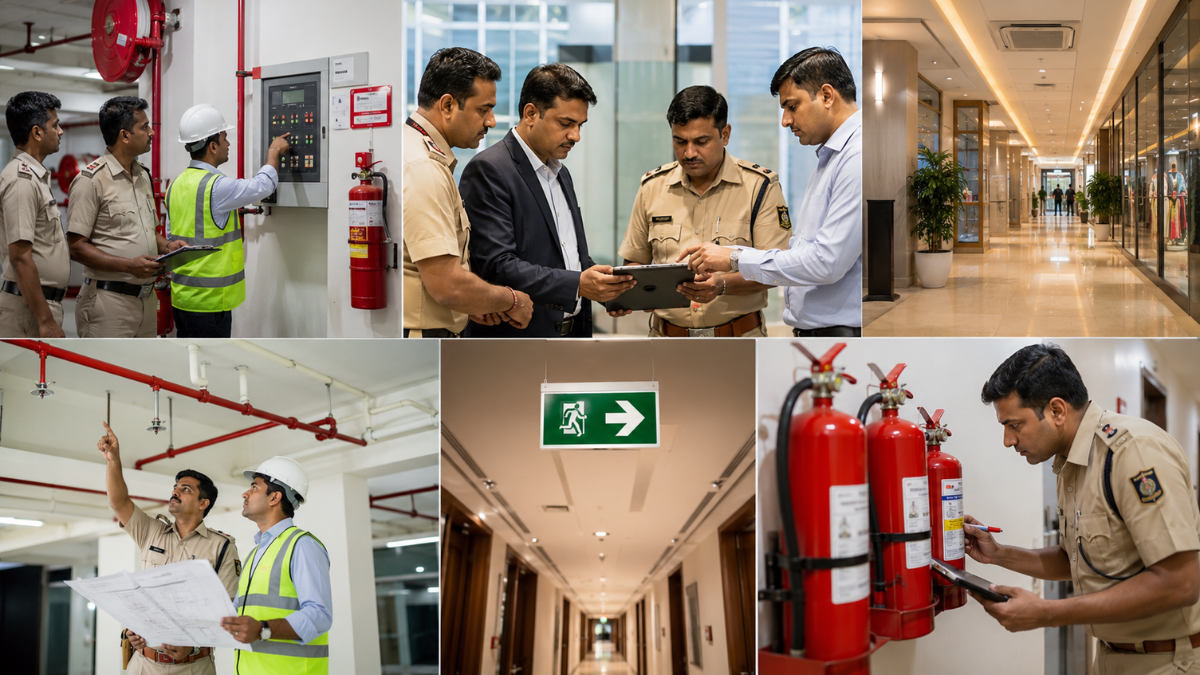
Fire safety is no longer viewed as a regulatory formality. Across India's growing cities, it has become one of the most important responsibilities for commercial property owners, developers and facility managers.
As hotels, hospitals, shopping complexes, office buildings and entertainment venues become larger and more complex, authorities are placing greater emphasis on ensuring that buildings are used according to approved plans and remain prepared for emergencies.
For commercial real estate, fire safety is now an essential part of building management rather than a one-time compliance requirement.
Fire Safety Goes Beyond Installing Equipment
Many property owners associate fire safety with extinguishers, alarms and emergency exits. While these systems are essential, they represent only one part of a building's overall safety framework.
A fire-safe building also depends on proper occupancy management, clear evacuation routes, approved electrical systems, regular maintenance and using every part of the building for its sanctioned purpose.
Ignoring any of these elements can increase safety risks during an emergency.
Why Approved Building Usage Matters
Every commercial building is approved for specific uses during the planning and construction process.
Areas such as basements, service floors and rooftops are designed with defined engineering and safety requirements. When these spaces are used for unauthorised commercial activities, they may create additional fire loads, obstruct evacuation routes or limit access for emergency responders.
Following the approved building plan is therefore as important as maintaining fire protection equipment.
Regular Inspections Help Prevent Larger Risks
Periodic fire safety inspections allow authorities and property owners to identify potential hazards before they become serious incidents.
Routine checks often include fire detection systems, sprinkler networks, emergency lighting, electrical installations, evacuation signage, access routes and compliance with building regulations.
Preventive inspections reduce operational risks and help maintain safer environments for employees, customers and visitors.
Fire Safety Protects More Than Property
A well-maintained fire safety system protects lives first and assets second.
For businesses, strong safety standards also reduce operational disruptions, improve tenant confidence and support long-term property value.
Commercial buildings that maintain high safety standards are generally better prepared to respond to emergencies while meeting regulatory expectations.
What This Means for Property Owners
Commercial property owners should treat fire safety as an ongoing management responsibility rather than a task completed during construction.
Regular audits, timely maintenance, staff training and compliance with approved building plans can reduce legal risks while improving the overall safety of the property.
As regulations continue to evolve, proactive compliance is becoming an important part of professional property management.
The Bottom Line
Modern commercial buildings require more than good architecture and premium amenities—they require a strong culture of safety.
Fire safety compliance helps protect occupants, preserve property value and ensure that buildings remain operational and legally compliant.
As India's commercial real estate sector continues to expand, maintaining high fire safety standards will remain a fundamental responsibility for every property owner and developer.