
India's Ageing Buildings Need More Than Demolition They Need a Structural Safety Policy
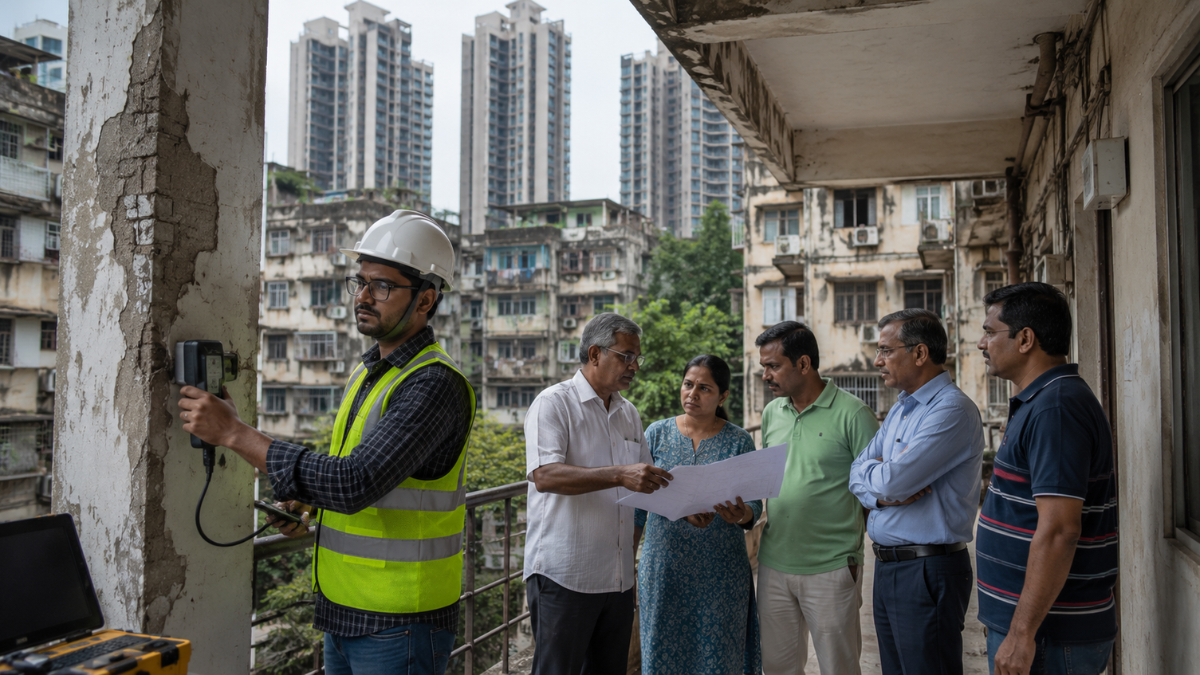
Every monsoon, municipal authorities across India identify buildings that are considered unsafe for occupation. Some are evacuated, others are demolished, and many more remain under observation until structural inspections are completed.
While these actions help reduce immediate risks, they also raise a larger question for India's rapidly growing cities.
Why are authorities still reacting after buildings become dangerous instead of preventing the problem much earlier?
As urban centres continue to expand, India's real estate conversation is no longer limited to new housing projects. The condition of ageing residential buildings is emerging as an equally important challenge that could shape future urban planning and redevelopment policies.
India's Housing Stock Is Getting Older
Large numbers of residential buildings constructed during the 1980s, 1990s and early 2000s are now entering an age where maintenance becomes increasingly important.
Exposure to heavy rainfall, water seepage, corrosion of reinforcement steel, poor repairs and changing soil conditions can gradually affect structural performance if buildings are not inspected and maintained over time.
Although many older buildings remain perfectly safe, experts say regular structural assessments become more important as buildings age, particularly in densely populated cities.
Demolition Is a Response, Not a Long-Term Solution
Municipal corporations usually order demolitions only after a building has been declared unsafe or when public safety is at immediate risk.
By that stage, residents often face evacuation, financial loss and uncertainty about rehabilitation or redevelopment.
Urban planners argue that periodic structural audits can help identify serious problems before emergency action becomes necessary. Early intervention may also reduce repair costs and improve public safety.
Redevelopment Is Becoming Part of the Solution
Across cities such as Mumbai, Pune, Ahmedabad and parts of Delhi-NCR, ageing residential societies are increasingly exploring redevelopment instead of repeated repairs.
Redevelopment allows obsolete buildings to be replaced with modern structures that meet current engineering standards while offering improved amenities and better utilisation of urban land.
However, successful redevelopment depends on clear legal approvals, agreement among residents and financially viable project planning.
Why Homebuyers Should Pay Attention
For buyers considering resale properties, the age of a building should be only one part of the evaluation.
Equally important are factors such as maintenance history, repair records, structural condition, society management and compliance with local regulations.
A well-maintained 30-year-old building may provide greater long-term value than a poorly maintained property that is significantly newer.
Understanding the overall condition of the asset is often more important than judging it by age alone.
The Need for a Preventive Safety Framework
Several experts believe Indian cities need to move beyond emergency demolitions and adopt a more preventive approach to structural safety.
Periodic inspections, timely maintenance, transparent reporting and stronger awareness among housing societies could help identify risks before they become public safety concerns.
Such measures would not only improve resident safety but also support sustainable urban redevelopment and protect the long-term value of residential assets.
The Bottom Line
India's real estate sector is entering a new phase where maintaining existing housing stock is becoming just as important as building new homes.
As cities grow denser and residential buildings continue to age, structural safety can no longer remain an issue addressed only after visible deterioration or emergency notices.
A stronger focus on preventive maintenance, professional inspections and planned redevelopment may prove to be one of the most important investments Indian cities make over the coming decade.