
Why Soil Testing Before Construction Can Decide the Future of a Building
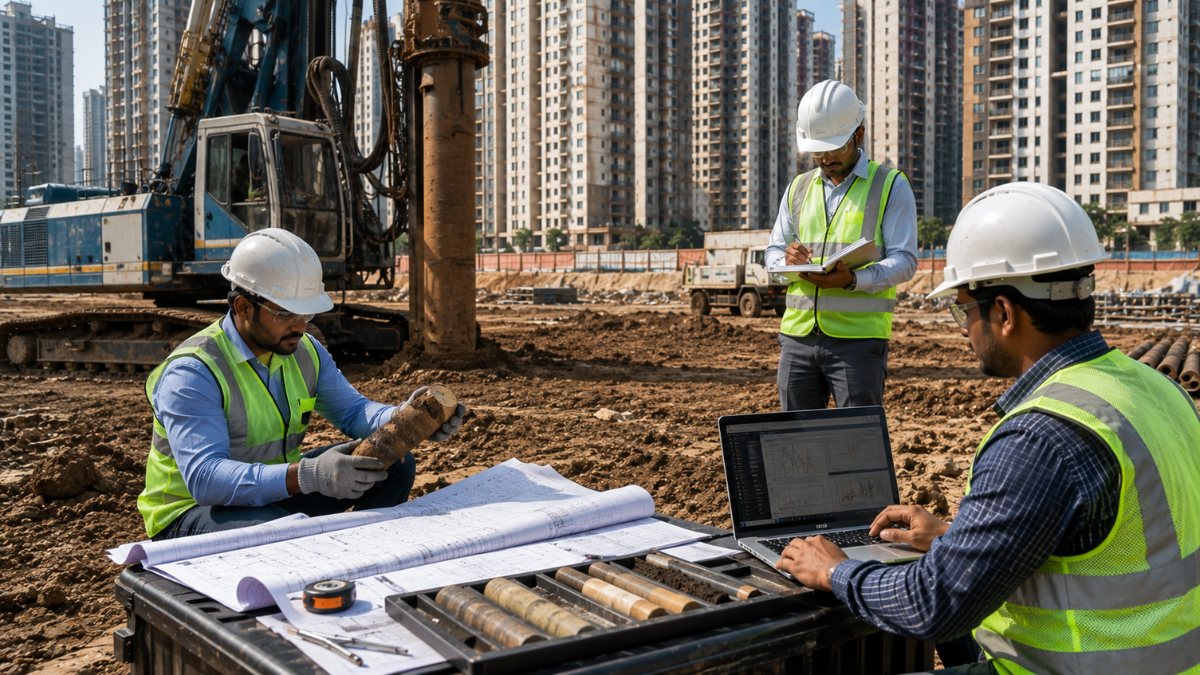
Every successful building starts long before the first brick is laid or the foundation is poured. One of the most important stages of any residential or commercial project happens underground—through a geotechnical investigation.
While homebuyers often focus on location, amenities and the developer's reputation, the condition of the soil beneath a building plays a vital role in determining its long-term stability. A well-designed foundation depends on understanding what lies below the surface, making soil testing one of the most critical parts of the construction process.
What Is a Geotechnical Investigation?
A geotechnical investigation is a scientific study carried out before construction begins to understand the characteristics of the ground.
Engineers examine soil layers, rock formations, groundwater levels and the load-bearing capacity of the land. Using boreholes and laboratory testing, they determine how the ground is likely to behave under the weight of a building.
The findings help structural engineers select a foundation system that matches the site's actual ground conditions.
Why Foundation Design Depends on Soil Conditions
Not every plot of land has the same underground characteristics.
Some sites contain hard rock close to the surface, while others may have soft soil, reclaimed land, filled ground or varying geological conditions across different sections of the project.
For this reason, engineers cannot apply a single foundation design to every site. The foundation must be planned according to the soil conditions identified during the investigation to ensure the building remains stable throughout its life.
How Poor Ground Assessment Can Affect a Project
If underground conditions are not accurately identified or properly considered during foundation planning, a building may experience structural challenges over time.
Ground movement, uneven settlement and foundation stress can affect the overall performance of a structure, particularly in large residential developments where soil conditions may vary across the site.
This is why developers, engineers and geotechnical consultants work together during the planning stage to minimise construction risks before work begins.
Why Homebuyers Should Pay Attention
Most homebuyers never see a geotechnical report, yet it forms the foundation of every well-planned project.
Reputed developers generally conduct detailed soil investigations before construction and design foundations according to engineering recommendations and applicable building standards.
When evaluating a property, buyers should look beyond attractive layouts and amenities and consider factors such as the developer's engineering practices, construction quality and regulatory compliance.
What This Means for India's Real Estate Sector
As Indian cities expand, developers are increasingly building on sites with diverse geological conditions.
This makes geotechnical investigations more important than ever. Accurate soil assessment supports safer buildings, better engineering decisions and improved project quality, helping reduce long-term structural risks.
For an industry focused on sustainable urban growth, understanding the ground beneath a project is just as important as designing the structure above it.
The Bottom Line
A building's strength is determined not only by the materials used but also by the foundation on which it stands.
Comprehensive soil testing and professional geotechnical investigations enable engineers to make informed foundation decisions that improve structural safety and long-term performance.
In modern real estate development, what happens below the ground can be just as important as what rises above it.