
India Is Building Faster Than Ever So Why Is There Still a Shortage of Skilled Construction Workers?
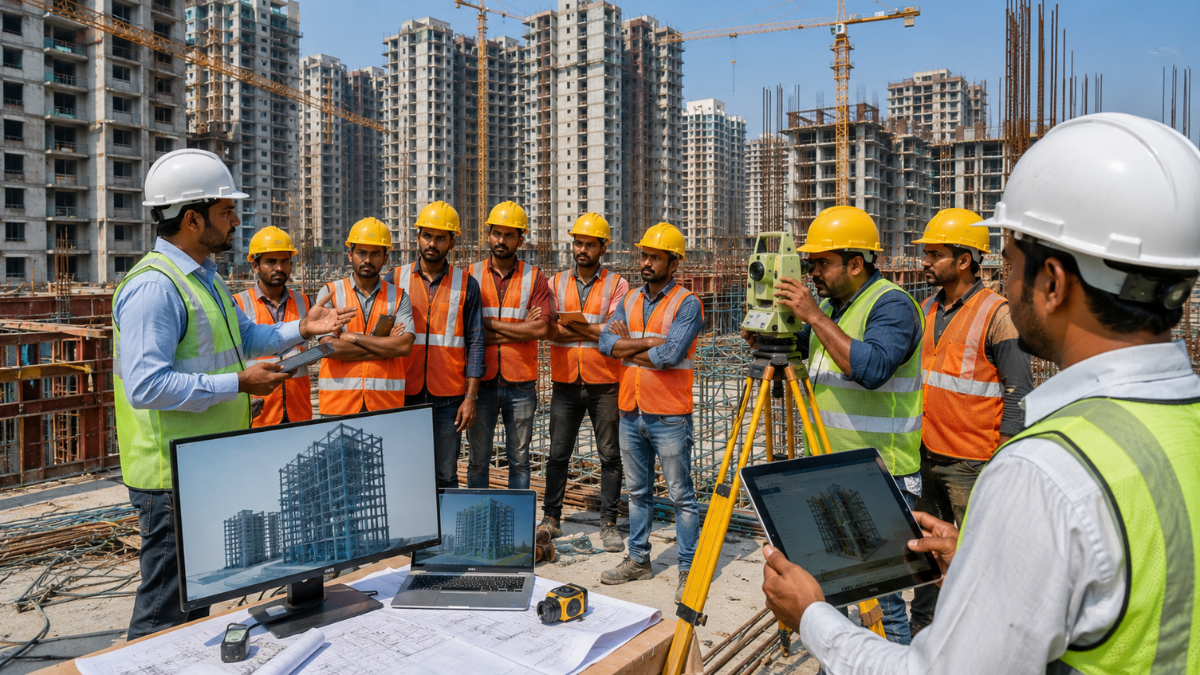
India is witnessing one of its biggest construction booms in decades.
New housing projects, expressways, metro networks, industrial corridors, airports and smart cities are being announced across the country. Real estate developers are expanding into new markets while governments continue investing heavily in infrastructure.
Despite this rapid growth, one challenge continues to slow the sector's momentum.
The shortage of skilled construction workers.
Industry leaders have repeatedly pointed out that while the number of workers remains large, the availability of trained professionals capable of meeting modern construction standards is still limited. As projects become more complex, the demand for specialised skills is growing faster than the workforce can adapt.
The Construction Industry Is Changing Faster Than Its Workforce
Today's construction sites are very different from those of a decade ago.
Modern residential and commercial projects rely on advanced construction techniques, mechanised equipment, prefabricated components, digital project management and stricter quality standards.
This transformation has increased the need for workers who are trained in specialised trades rather than relying only on traditional construction experience.
For developers, finding qualified workers has become just as important as securing land or project approvals.
Why the Skills Gap Matters
A shortage of trained workers affects more than hiring.
Developers often face challenges in maintaining construction schedules, ensuring consistent workmanship and meeting increasingly demanding quality expectations.
The availability of skilled labour can influence project timelines, productivity and execution efficiency, particularly during periods of high construction activity.
As India's housing demand continues to grow, workforce capability is becoming a strategic factor in project delivery.
Governments Are Shifting From Welfare to Workforce Development
Several states are now exploring programmes that combine labour welfare with skill development instead of focusing only on financial assistance.
The objective is to help construction workers improve technical capabilities while also creating better employment opportunities for their families through recognised training programmes.
Industry experts believe that strengthening workforce skills can improve both worker incomes and overall construction quality.
Technology Is Redefining Construction Careers
The construction sector is no longer limited to traditional site-based occupations.
Digital planning, Building Information Modelling (BIM), drone surveying, project monitoring, prefabrication and construction technology are creating demand for new roles that require specialised technical knowledge.
As technology becomes a larger part of real estate development, continuous skill upgradation is likely to become essential for both workers and employers.
What This Means for India's Real Estate Market
India's ambition to build more homes, commercial spaces and infrastructure will depend not only on investment and policy support but also on the availability of a capable workforce.
Developers who invest in skilled labour are likely to benefit from improved construction quality, better productivity and more efficient project execution.
For homebuyers, a stronger workforce can contribute to better-built projects and greater confidence in the long-term quality of residential developments.
The Bottom Line
India's construction sector is entering a phase where workforce quality may become as important as capital, land and regulatory approvals.
Bridging the skills gap will require collaboration between governments, training institutions and the private sector.
As real estate projects become larger and more technology-driven, developing a skilled construction workforce will play a crucial role in shaping the future of India's housing and infrastructure landscape.