
Nagpur Metro Extension Could Change More Than Connectivity Here's Why Property Owners Are Watching Closely
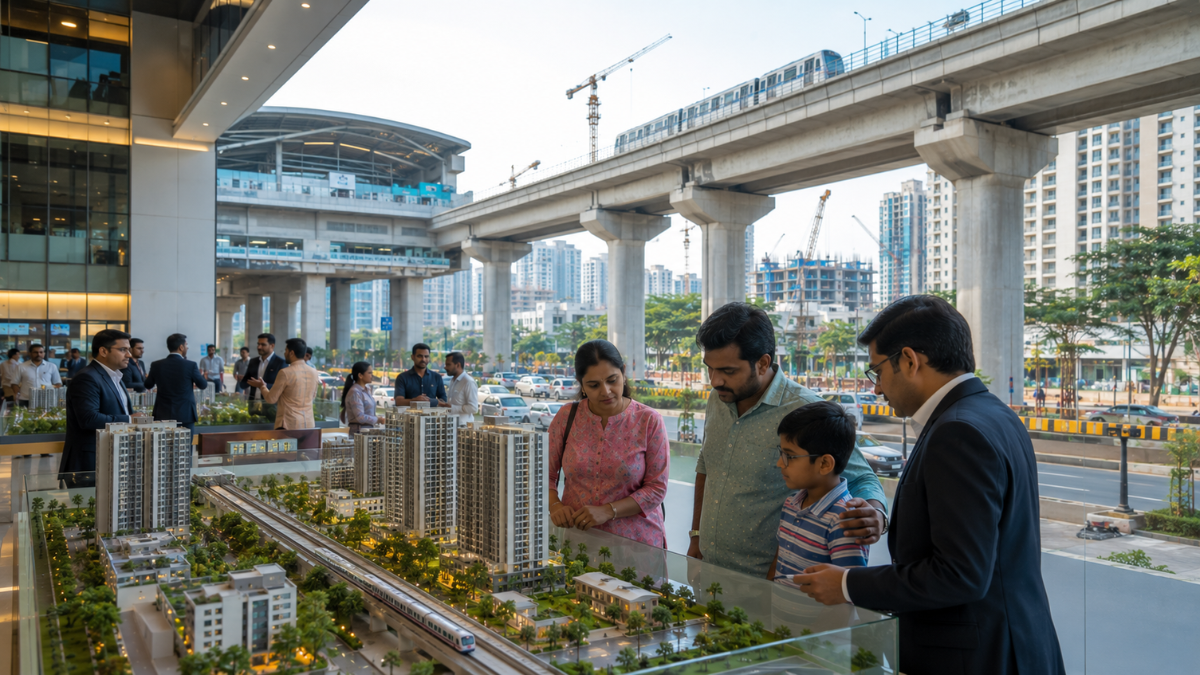
NAGPUR | July 23, 2026: The proposed Kanhan Metro extension is expected to do more than improve public transport. With the Maharashtra government giving in-principle approval for Transit-Oriented Development (TOD) along the corridor, the project could also influence how the surrounding areas are planned and developed in the coming years.
For property owners, developers and homebuyers, the announcement is significant because it opens the possibility of higher-density residential and commercial development around the future Metro alignment, subject to detailed planning and regulatory approvals.
Why TOD Matters Beyond the Metro
Transit-Oriented Development is an urban planning approach that encourages homes, offices, shops and public spaces to grow around mass transit systems.
In the case of the Kanhan extension, the proposed TOD zone will cover land within 500 metres on either side of the Metro corridor. Planning authorities may allow additional development rights in this influence zone after collecting the prescribed premium.
However, the government notification provides only an in-principle approval. Key details such as the exact permissible FSI, eligible land parcels and implementation framework will be finalised through a detailed TOD plan.
Higher FSI Could Create New Development Opportunities
One of the biggest takeaways for the real estate sector is the possibility of additional Floor Space Index (FSI).
A higher FSI allows more built-up area on the same plot, which can make residential and commercial projects more viable where infrastructure supports increased density.
While existing Metro corridor norms in Nagpur permit FSI up to certain limits depending on planning conditions, the government has not yet specified what additional FSI will eventually apply to the Kanhan corridor.
Revenue Model Goes Beyond Ticket Sales
The Metro project is also expected to generate revenue through multiple non-fare sources.
According to the government order, commercial development of Metro-owned land, advertising rights, station branding, kiosks, parking, ATMs and other commercial activities may contribute to project funding. The notification also allows the use of certain planning-related charges and surcharges to support urban transport infrastructure.
Officials plan to utilise these revenues for loan repayment, operations, maintenance and future infrastructure projects.
Construction Target Set for 2027
The elevated Metro extension will add one new station in Kanhan Town and has a targeted completion timeline of December 2027.
The project is estimated to cost ₹310.35 crore, with part of the funding expected to come through institutional borrowing.
What Should Homebuyers and Property Owners Keep in Mind?
Metro announcements often create excitement in the real estate market, but infrastructure projects typically unfold over several years.
Experts generally advise buyers and investors to evaluate existing connectivity, civic infrastructure, neighbourhood demand and project timelines instead of making decisions based solely on future expectations.
The detailed TOD plan will ultimately determine how much additional development is permitted and which areas stand to benefit the most.
Why This Matters
Across India, Metro projects are increasingly being used as catalysts for urban redevelopment rather than just transport upgrades. The proposed Kanhan TOD initiative reflects this broader trend by linking public transport with future housing and commercial growth. While the final impact will depend on planning decisions yet to be announced, the project has already drawn attention from developers and property owners looking at the long-term potential of the surrounding corridor.