
Indore Tightens Fire Safety Rules Commercial Buildings Face Action for Basement and Rooftop Violations
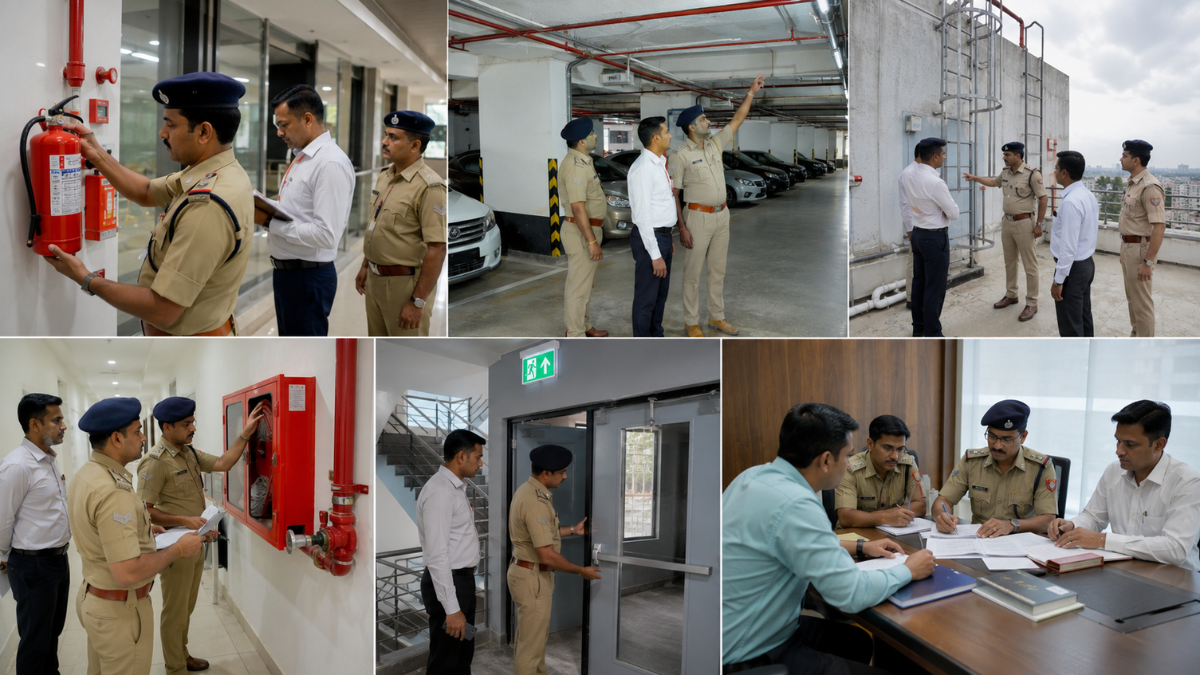
INDORE | July 27, 2026: The Indore Municipal Corporation (IMC) has launched a city-wide enforcement drive to strengthen fire safety compliance, warning commercial property owners that violations involving basements and rooftops could lead to legal action and even sealing of premises.
The campaign targets commercial buildings where unauthorised activities may increase fire risks and compromise public safety.
Commercial Establishments Under Inspection
The civic body's inspection drive covers a wide range of establishments, including hotels, restaurants, banquet halls, hospitals, clubs and other commercial properties.
Officials are verifying whether building owners are using their premises in accordance with approved plans, building regulations and mandatory fire safety requirements.
The inspections are intended to identify violations before they result in serious safety incidents.
Basements and Rooftops Face Greater Scrutiny
According to the municipal authorities, basements should be used only for purposes permitted under approved building plans, such as parking or other authorised activities.
The corporation has warned that operating kitchens, food preparation units or other high-risk commercial activities in basements without the required approvals and fire protection systems will be treated as a violation.
Similarly, unauthorised commercial operations on rooftops are also under scrutiny because such activities can complicate emergency evacuation and firefighting efforts.
Violators May Face Legal Action
The IMC has stated that properties found violating applicable building regulations and fire safety standards may receive formal notices, face legal proceedings or be sealed if serious non-compliance is detected.
Officials say the objective is to improve public safety by ensuring that commercial buildings comply with the provisions of the National Building Code and local building regulations.
Fire Safety Compliance Becoming a Bigger Priority
Following several fire-related incidents reported in commercial buildings across different parts of the country in recent years, many urban local bodies have increased inspections of hotels, hospitals, shopping complexes and entertainment venues.
Authorities are placing greater emphasis on maintaining clear escape routes, approved building usage, operational fire protection systems and compliance with occupancy regulations.
What This Means for Property Owners
Owners and operators of commercial buildings should review whether their properties comply with approved building plans and fire safety requirements. Regular maintenance of fire protection systems and adherence to authorised building use can help reduce safety risks and avoid enforcement action.
Why This Matters
Fire safety is not limited to installing extinguishers or emergency exits. The way a building is used also plays a critical role in protecting occupants during emergencies. Indore's latest enforcement drive highlights the increasing focus of urban authorities on ensuring that commercial properties comply with safety regulations before accidents occur.