
Hyderabad Homebuyers Get a Big Relief Telangana Shifts Indiramma Housing to Prime Residential Areas
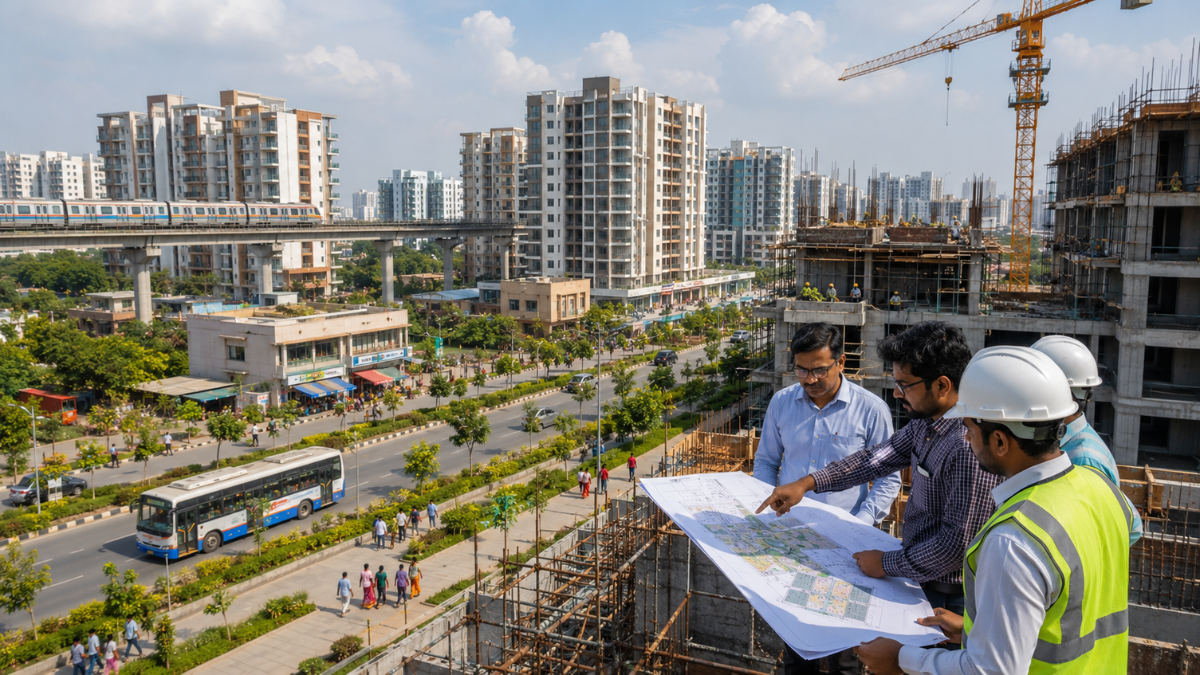
HYDERABAD | July 25, 2026: One of the biggest concerns for beneficiaries of government housing schemes is being allotted homes far away from the city, where daily travel to work, schools and hospitals becomes both expensive and time-consuming. The Telangana government now wants to avoid that situation.
In a significant policy direction, Chief Minister A. Revanth Reddy has instructed officials that houses under the Indiramma Housing Scheme in Hyderabad should be developed within established residential neighbourhoods instead of isolated locations on the city's outskirts.
The move is expected to make affordable housing more practical for thousands of families who depend on easy access to jobs and public services.
Government Wants Homes Closer to Everyday Life
During a review meeting on the implementation of the scheme, the Chief Minister stressed that owning a house should not come at the cost of losing access to employment opportunities.
Officials were told to identify unused government land within Hyderabad's Core Urban Region so that beneficiaries can continue living close to workplaces, schools, hospitals and public transport after receiving their homes.
The decision reflects a shift from simply constructing houses to creating communities that remain connected to the city's economic and social infrastructure.
Nearly 8,000 Flats Planned in the First Phase
The state government has approved the construction of 7,680 flats during the first phase of the programme.
The proposed projects will be spread across several Assembly constituencies, including Rajendranagar, Serilingampally, Jubilee Hills, Kukatpally, Khairatabad, Amberpet, Malkajgiri, Medchal, Qutbullapur, Sanatnagar, Malakpet and other parts of Hyderabad.
By distributing projects across multiple urban locations, the government aims to improve access to affordable housing without pushing beneficiaries away from the city's developed areas.
Here's What the Homes Will Offer
The proposed housing will consist of multi-storey apartment buildings, with each flat offering a built-up area of 525 square feet.
Officials said the land cost will be borne entirely by the Telangana government, reducing the overall financial burden on the project.
Each housing unit is estimated to cost around ₹11 lakh. Under the proposed model, the government will provide a ₹5 lakh subsidy, while beneficiaries will contribute the remaining ₹6 lakh in four instalments.
Why This Decision Is Different
Government housing projects are often criticised because beneficiaries receive homes in distant locations where transport, schools, healthcare and employment opportunities remain limited.
By insisting that Indiramma homes be constructed within residential neighbourhoods, the Telangana government is attempting to address a challenge that has affected several affordable housing projects across Indian cities.
Urban planners have long argued that affordable housing is most effective when residents remain connected to the city's existing infrastructure rather than being relocated to remote areas.
What This Means for Homebuyers
For eligible families, the announcement could mean more than just receiving a home. Living within established residential areas can reduce commuting time, lower transportation costs and provide easier access to schools, hospitals and other everyday services.
If implemented as planned, the policy could improve both the quality of housing and the overall living experience for beneficiaries.
Why This Matters
Affordable housing is no longer just about building more homes—it is increasingly about where those homes are built. Telangana's latest decision signals a shift towards location-focused urban planning, recognising that access to jobs, transport and civic infrastructure plays a crucial role in improving the long-term success of government housing schemes. If executed effectively, the approach could influence how future affordable housing projects are planned in other states as well.