
Why Some Cities Run Out Of Affordable Homes Even When Thousands Of New Houses Are Built
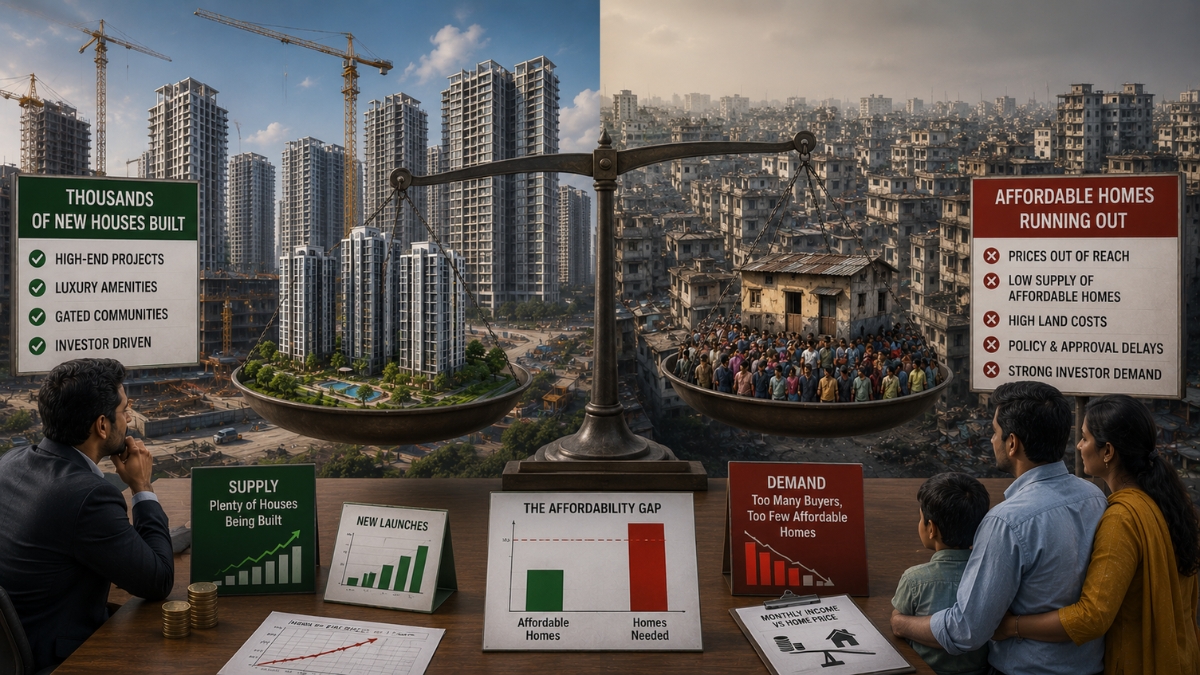
INDIA | June 18, 2026: Every year, thousands of new homes are launched across Indian cities.
New apartments appear.
New townships are announced.
New housing projects are marketed aggressively.
Yet millions of middle-class families continue asking the same question:
If so many homes are being built, why is buying a house becoming harder?
The answer lies in a problem that affects many growing cities but often receives less attention than rising property prices.
More Houses Does Not Always Mean More Affordable Housing
A city may add thousands of housing units every year.
However, if most of those units target premium buyers, the shortage of affordable homes can continue.
In many cities, supply is growing faster in luxury and upper-mid-income segments than in entry-level housing.
Land Becomes Expensive Long Before Construction Starts
One of the biggest factors behind housing affordability is land cost.
As cities expand and infrastructure improves, land prices often rise much faster than household incomes.
Developers purchasing expensive land frequently have limited flexibility to offer lower-priced housing.
Why Middle Class Buyers Feel Left Behind
Many families discover that their income growth has not matched property price growth.
At the same time, additional costs such as:
- Registration charges
- GST
- Parking fees
- Maintenance deposits
- Loan interest
can significantly increase the final cost of ownership.
Infrastructure Can Increase Prices Before Benefits Arrive
New roads, metro projects, airports and business districts often improve long-term growth prospects.
However, property prices sometimes rise years before residents start receiving the full benefits of those projects.
This creates affordability challenges for local buyers.
The Hidden Impact Of Development Restrictions
In several cities, strict planning regulations limit how much housing can be built on available land.
Restrictions on building heights, Floor Area Ratio (FAR) and land use can reduce supply even when demand continues growing.
Urban planners often debate whether smarter density policies could improve affordability.
Why Peripheral Areas Keep Growing
As central locations become expensive, buyers increasingly move towards surrounding towns and emerging growth corridors.
This trend can be seen around several major Indian cities where housing demand has shifted beyond traditional urban centres.
What Homebuyers Should Watch
Instead of focusing only on property prices, buyers should also track:
- New housing supply
- Infrastructure development
- Population growth
- Employment expansion
- Planning policy changes
These factors often influence future affordability trends.
The Real Challenge Facing Growing Cities
The challenge is not simply building more homes.
The challenge is creating enough homes that average families can realistically afford.
Cities that successfully balance housing supply, infrastructure and affordability are often better positioned for long-term growth.