
Bhopal Commercial Crackdown Puts Spotlight on City’s 20-Year Planning Gap
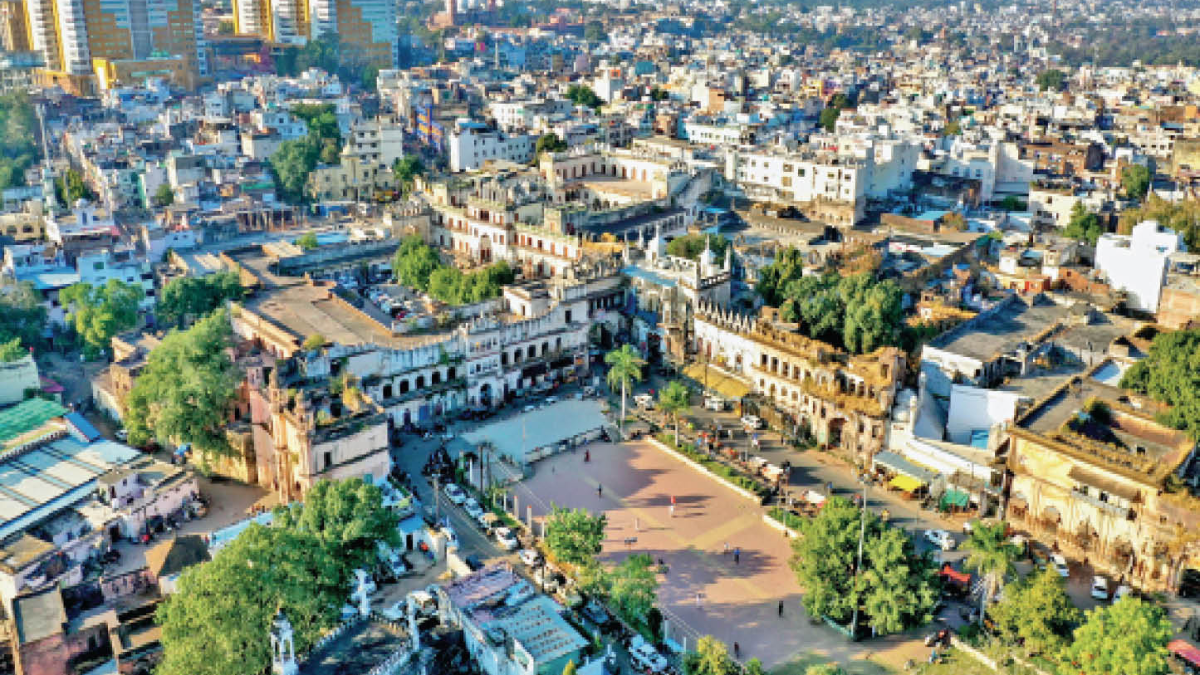
Bhopal, Madhya Pradesh | September 4, 2026: Bhopal’s latest crackdown on commercial activities operating from residential properties has brought an old urban-planning problem back into focus — the city has been functioning under its 2005 Development Plan for more than two decades despite major changes in population, construction and land use.
The Bhopal Municipal Corporation (BMC) has resumed action against commercial establishments operating from residential properties in compliance with Supreme Court directions. Nearly 200 establishments reportedly shut voluntarily, while the civic body also sealed properties that continued commercial activity. Traders have opposed the action and are seeking a mixed-land-use policy.
The dispute has exposed a larger challenge for Bhopal’s property market: the city has expanded considerably while its formal planning framework has struggled to keep pace.
Bhopal Still Operates Under 2005 Development Plan
The 2005 Development Plan remains the operative planning framework for Bhopal as successive attempts to replace it have not reached final approval.
The most recent major proposal was the draft Bhopal Development Plan 2031. The state government returned the draft in February 2024, around 36 months after it was submitted, and directed officials to prepare a longer-term plan looking towards 2047.
This has left a significant gap between the city’s present development pattern and the planning framework under which land use is regulated.
Commercial Activity Has Expanded Beyond Old Planning Assumptions
Bhopal has changed substantially since the existing plan was prepared.
The city has experienced population growth, expansion of its urban footprint and the emergence of new forms of commercial development. Unauthorised colonies have also increased, while establishments such as marriage gardens have become more common in areas where such uses were not necessarily anticipated under the older plan.
This mismatch is now becoming visible through enforcement action against commercial activities operating in residential areas.
For property owners, the issue is important because a property’s location within an established residential neighbourhood does not automatically mean it can legally be used for every type of commercial activity.
Traders Seek Mixed-Land-Use Policy
The BMC’s enforcement drive has triggered protests from affected traders and business owners.
Their demand for a mixed-land-use policy reflects the changing nature of urban neighbourhoods, where residential and commercial activities increasingly exist alongside each other.
However, any relaxation of land-use rules would need to account for traffic, parking, fire safety, drainage, waste management and pressure on existing infrastructure.
A revised development plan could provide a more structured framework for deciding which commercial activities should be permitted in residential areas and under what conditions.
Environmental Constraints Make Bhopal’s Planning More Complex
Bhopal’s planning challenge is not limited to deciding where commercial activity should be allowed.
The city has a sensitive geographical and ecological environment, including Bhojtal, catchment areas and protected areas such as Van Vihar.
Planning experts have pointed to the need to balance construction and urban expansion with protection of the city’s lakes and surrounding ecosystems.
Rapid development without an updated land-use framework can make it more difficult to protect environmentally sensitive areas while also providing adequate infrastructure for growing neighbourhoods.
Bhopal 2031 Plan Was Near Final Stage Before Being Returned
The delay in approving a new plan has involved several stages of procedural, technical, administrative and environmental challenges.
The draft 2031 plan had reportedly completed the process of inviting and considering public objections and suggestions under Section 19(3) and was approaching the final approval stage under Section 19(4) when the government decided to shift towards a 2047 planning horizon.
The decision effectively extended the period before Bhopal receives a new approved development framework.
Planning Gap Matters for Property Owners and Developers
For developers, an outdated planning framework can make it harder to anticipate how land-use regulations will evolve and where future commercial and residential development will be permitted.
For property owners, the current crackdown also highlights the risks of using residential premises for commercial purposes without checking applicable land-use permissions.
A clearer and updated master plan could provide greater certainty around residential zones, commercial corridors, mixed-use areas, infrastructure requirements and environmentally sensitive locations.
For homebuyers, the planning status of a neighbourhood can also be an important part of due diligence, particularly where commercial activity is already expanding around residential properties.
Bhopal Needs a Planning Framework That Matches Its Current Growth
The current commercial crackdown is therefore more than an enforcement issue. It highlights the consequences of a city growing significantly beyond the assumptions of its last approved development plan.
The proposed Bhopal Development Plan 2047 will have to address present land-use patterns while planning for future population, housing, employment, transport and infrastructure needs.
If the new framework provides clear and practical land-use rules while protecting Bhopal’s ecological assets, it could reduce the uncertainty currently facing property owners, developers and businesses.
Until then, the conflict between existing commercial activity and the city’s older planning framework is likely to remain a major issue for Bhopal’s real estate and urban development landscape.