
Maharashtra Housing Society Bylaws Face 5,000 Plus Suggestions on Parking, EVs and Maintenance
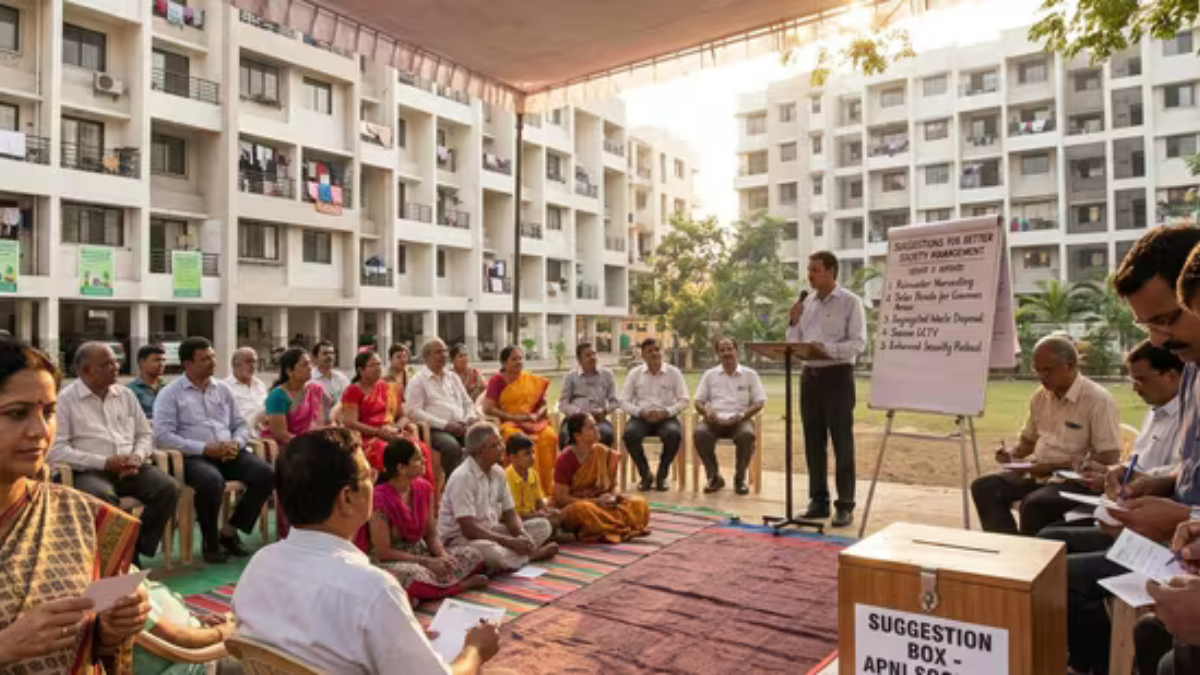
Mumbai, Maharashtra | September 24, 2026: Maharashtra's proposed housing society bylaws are facing more than 5,000 suggestions and objections, putting issues such as parking, EV charging, maintenance charges and managing committee powers at the centre of the state's proposed rules for over 1.17 lakh housing societies.
The volume of feedback could influence how apartment owners and housing societies handle common areas, parking infrastructure, maintenance expenses and internal decision-making once the new bylaws are finalised.
More Than 5,000 Suggestions Received
The Maharashtra cooperation department invited residents, housing societies and their federations to submit suggestions and objections after publishing the draft bylaws.
Officials said more than 5,000 suggestions have been received so far.
A large share of the feedback reportedly relates to:
- Parking classification and use
- EV charging infrastructure
- Maintenance charges
- Powers of managing committees
- Society approvals and NOCs
The suggestions are now being examined by the committee handling the draft bylaws.
EV Charging Rules Draw Attention
The draft rules provide that EV charging equipment installed exclusively by an individual member within their allocated space would remain the financial responsibility of that member.
Residents have suggested a different approach, seeking greater responsibility for housing societies to make charging spaces available, establish common charging stations and maintain the shared infrastructure.
For apartment owners, the final provision could determine how the cost of EV charging infrastructure is divided between individual members and the society.
Parking Classification Could Change
Parking is another major area of feedback.
The draft bylaws classify common parking areas, visitor parking, parking decks and mechanical parking systems as common areas and facilities maintained by the society.
Suggestions have sought clearer treatment of different types of parking, including:
- Open parking slots
- Stilt parking
- Podium parking
- Visitor parking
- Mechanical parking
Clearer classification could reduce disputes over responsibility for maintenance and use, particularly in larger housing societies where parking rights frequently become an issue.
Maintenance Charges Become a Key Dispute
The draft bylaws also propose a standard approach to maintenance charges.
Common service charges would be divided equally among flats, while water charges would be linked to the number and size of taps or inlets.
Some owners of smaller flats have objected to equal common-service charges and have pushed for an area-based approach.
Officials, however, have said the equal-charge provision for common services such as security, electricity, housekeeping and management is aligned with the applicable rules and law.
The final framework will therefore be important for societies currently using different methods to calculate monthly maintenance.
Residents Seek Limits on Managing Committee Powers
Another major theme in the suggestions is the authority given to housing society managing committees.
According to officials, some residents believe committees have excessive powers, including in matters involving NOCs and sale- or lease-related approvals.
Suggestions have sought to reduce these powers and create a more balanced framework between managing committees and individual members.
If accepted, such changes could affect how apartment owners obtain approvals and resolve disputes within their societies.
New Rules Could Clarify Grey Areas
Officials involved in the process have described the proposed bylaws as more comprehensive than the existing framework.
One area highlighted is responsibility for leakages within flats, where existing rules can leave room for disputes over whether the society or individual owner should bear the cost.
Clearer provisions could help societies deal with recurring maintenance and repair disputes more consistently.
When Will Maharashtra's New Bylaws Be Finalised
Joint Registrar Shahaji Patil, who heads the committee on the bylaws, said the rules are expected to be finalised by the first week of October after further meetings.
Officials said around 90% of the work has been completed and that suggestions from Mumbai, the Mumbai Metropolitan Region and Nashik are being examined.
Not every suggestion will be incorporated. Officials said proposals that fall within the applicable rules and laws can be accepted, while others may not be adopted even if they address issues raised by residents.
What Housing Societies Should Watch Next
Once the new bylaws are published, housing societies will have to examine their existing rules and align them with the final framework.
Officials said societies will be required to adopt the new bylaws within three months of their publication. Any society seeking to modify provisions for a specific requirement will need approval from the registrar.
For apartment owners, the most important changes to watch will be the final provisions on parking, EV charging, maintenance calculations, managing committee powers and repair responsibilities.