
Rajasthan Clears Two Limestone Projects Near Great Indian Bustard Habitat
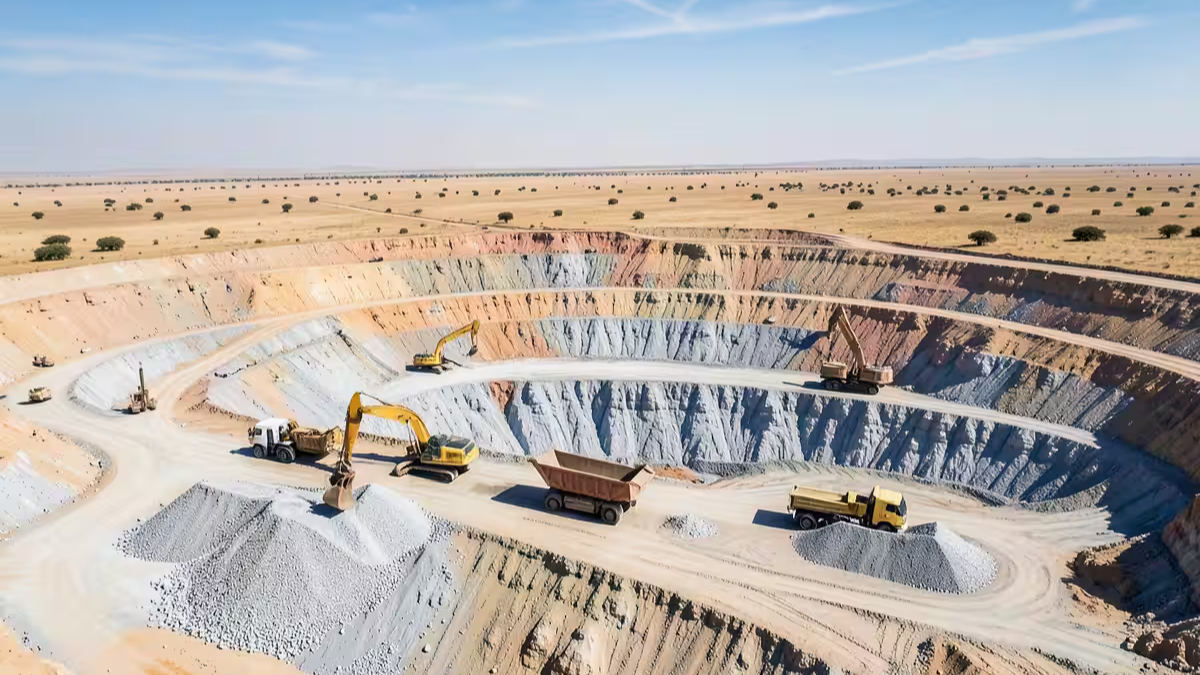
Jaisalmer, Rajasthan | October 23, 2026: Two limestone mining projects proposed in Rajasthan’s Jaisalmer district have received environmental clearance recommendations despite their proximity to areas identified as important habitat for the critically endangered Great Indian Bustard (GIB).
The projects involve Wonder Cement Limited’s Parewar SN1 Limestone Block and Dalmia Bharat Green Vision Limited’s Ramgarh Auctioned Block. While one project has a small portion of its mining area within the identified GIB habitat, the other is located outside the priority area but remains close enough to require environmental safeguards.
The approvals could support further industrial activity in Jaisalmer, but the location of the projects also puts the spotlight on how Rajasthan balances mineral development with protection of its fragile desert ecosystem.
One Project Overlaps GIB Habitat
Wonder Cement’s Parewar project covers around 960 hectares, with approximately 0.29 hectares falling within the identified GIB habitat.
The expert appraisal committee has recommended that no mining activity should take place in this portion. The company has also been asked to surrender the affected area after obtaining the required environmental clearance and completing the mining lease formalities.
The project is around 7.34 km from the Mokla Parewar Conservation Reserve, making environmental management a key part of its development.
Dalmia Bharat Project Located Near Priority Area
Dalmia Bharat Green Vision’s Ramgarh project has a mining lease area of more than 250 hectares and is located about 1.77 km from a GIB priority area.
A Wildlife Institute of India assessment examined the potential impact of mining and associated activities. While the proposed mining and cement plant area itself does not fall within critical GIB habitat, the wider impact zone contains grassland areas used by several wildlife species.
The assessment flagged possible effects from vehicle movement, dust, machinery and noise, particularly across the wider 10-km indirect impact zone.
Industrial Growth Meets Environmental Constraints
The projects underline the growing industrial importance of Jaisalmer’s mineral-rich areas, particularly for the cement sector.
At the same time, the approvals show that projects located near ecologically sensitive areas are likely to face additional conditions around land use, habitat restoration and monitoring.
For companies, this can influence project timelines and operating costs. For the wider region, successful implementation could bring industrial activity and employment while placing greater responsibility on developers to minimise environmental disruption.
Why This Matters for Property and Local Development
Large industrial projects can have an indirect impact on surrounding real estate markets by increasing employment, supporting logistics activity and improving demand for housing and commercial services.
However, areas close to protected or sensitive habitats can develop differently from conventional industrial corridors. Future residential or commercial development around such projects will depend heavily on environmental restrictions, connectivity and supporting infrastructure.
For property investors, the key point is that industrial approval alone does not automatically mean immediate real estate growth. Local planning rules, environmental restrictions and actual project execution will determine how much surrounding land benefits.
What Buyers and Investors Should Watch
Anyone considering land or property around emerging industrial zones in Jaisalmer should check:
- Whether the property falls within an environmentally sensitive or restricted zone.
- Distance from mining operations and associated industrial facilities.
- Proposed road and utility connectivity.
- Local development and land-use regulations.
- Whether the announced industrial project has moved beyond approvals into actual construction.
These checks become particularly important when large projects are located close to protected habitats.
What Happens Next
The next phase will focus on compliance with environmental conditions, land and mining lease formalities and implementation of mitigation measures.
For Wonder Cement, the exclusion of the GIB habitat portion from mining activity will be a key condition. For the Ramgarh project, continued monitoring of the wider landscape will be important as mining and associated infrastructure progress.
The projects therefore represent more than new mining capacity for Rajasthan: they could also shape how future industrial and real estate development is planned around environmentally sensitive areas.