
How Do Cities Decide They've Reached Their Limit? The Hidden Science Behind Urban Capacity
July 6, 2026: When a city approves taller buildings, larger townships or new commercial districts, one important question sits behind every planning decision:
Can the city actually support more people?
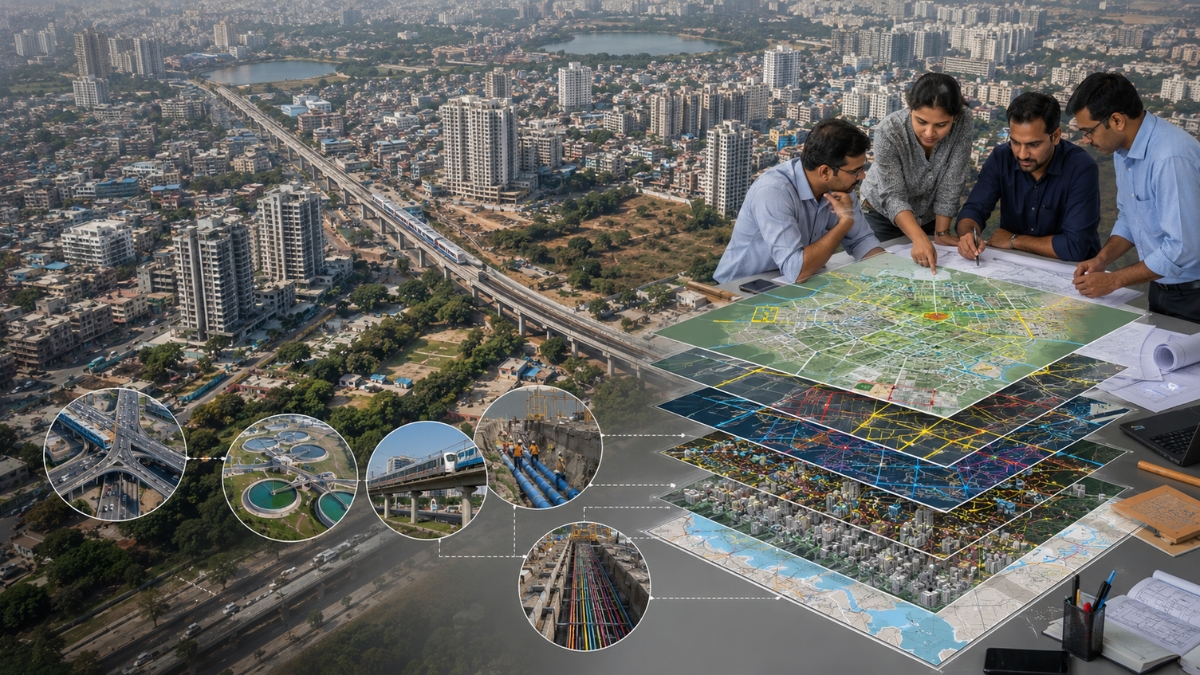
Urban planners don't evaluate growth only by the amount of available land. They also assess something known as urban carrying capacity—the ability of a city to accommodate additional residents without placing excessive pressure on infrastructure and public services.
Although the methods vary from city to city, the concept plays an important role in long-term urban planning.
Growth is measured through infrastructure, not just land
A city may still have vacant land, but that doesn't automatically mean it can support large-scale development.
Planning authorities often consider whether essential infrastructure can handle future demand, including:
- Road networks
- Water supply
- Sewerage systems
- Drainage
- Electricity
- Public transport
- Schools and healthcare facilities
- Open and recreational spaces
If these systems are already operating close to their practical limits, additional development may require major infrastructure upgrades.
Population growth changes everything
As cities expand, every new residential or commercial project increases demand for daily services.
More people generally mean:
- Higher traffic volumes
- Greater water consumption
- Increased waste generation
- Additional pressure on public transport
- Higher demand for social infrastructure
Planning authorities therefore try to estimate future population before approving large-scale urban expansion.
Why planning isn't only about taller buildings
Increasing the permissible height of buildings or allowing denser development can create more housing without expanding city boundaries.
However, higher density also concentrates more residents and activities within the same area.
That's why many planners emphasise balancing development permissions with parallel investment in transport, utilities and civic infrastructure.
Cities continue to evolve
Urban carrying capacity is not a fixed number.
It can improve as governments invest in:
- New roads
- Metro systems
- Water treatment plants
- Drainage upgrades
- Digital infrastructure
- Public services
These improvements allow cities to accommodate future growth more efficiently.
Grihik Takeaway
Successful cities are not defined by how many buildings they construct, but by how well their infrastructure supports the people living in them. Understanding urban carrying capacity helps explain why balanced planning remains one of the most important foundations of sustainable real estate development.