
The Building You See Isn't the Whole Project. There's an Entire Construction Network Behind It.
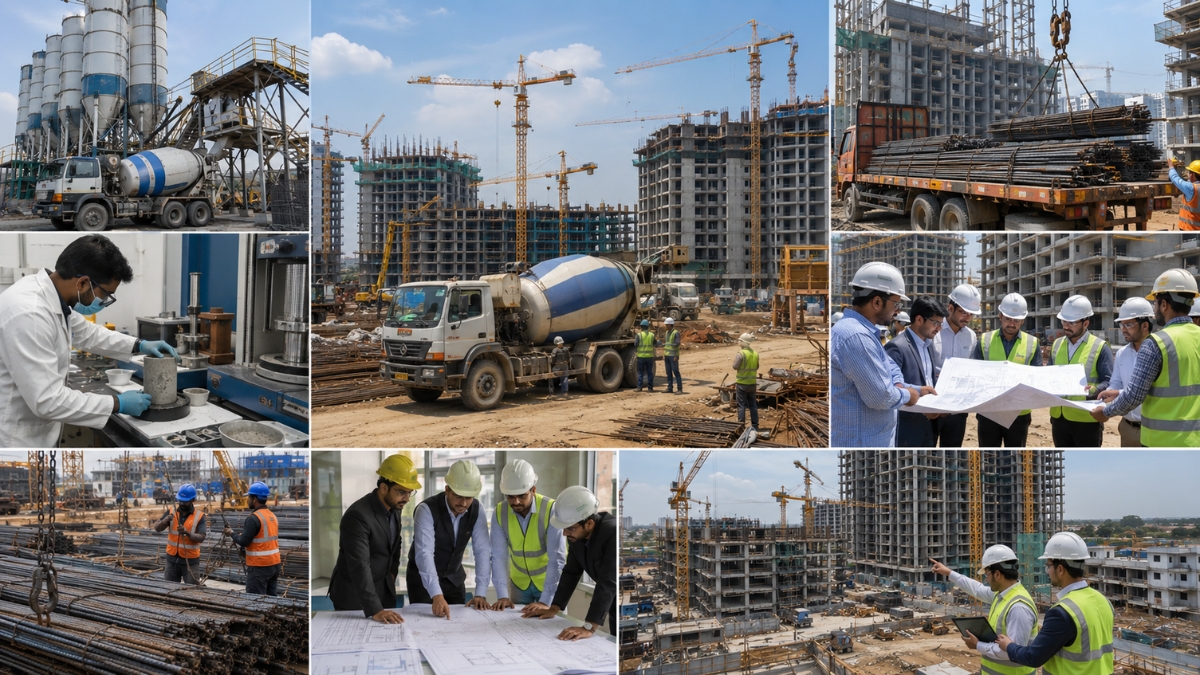
July 6, 2026: When people visit a construction site, they usually notice cranes, workers and rising towers.
What they don't see is the massive network working behind the scenes to keep that project moving every single day.
Every residential tower, office complex or township depends on dozens of specialised businesses that supply materials, equipment and technical services. If even one critical link slows down, the entire construction schedule can be affected.
Understanding this hidden ecosystem helps explain why building a real estate project is far more complex than simply laying bricks and pouring concrete.
A construction project is a chain, not a single company
Most buyers assume the developer builds everything.
In reality, a modern project involves a large network of independent businesses, including:
- Concrete suppliers
- Steel manufacturers
- Cement suppliers
- Electrical contractors
- Plumbing contractors
- Lift and fire safety specialists
- Architects and structural consultants
- Equipment rental companies
- Quality testing agencies
Each performs a different role, and construction progresses only when these services work together.
Delays don't always start at the project site
Construction timelines can be influenced by much more than labour availability.
Delays may occur because of:
- Material shortages
- Transport disruptions
- Supply chain interruptions
- Regulatory compliance issues
- Equipment availability
- Weather conditions
These factors often remain invisible to buyers but can affect project progress.
Why compliance matters throughout the supply chain
Every business involved in construction is expected to operate within the applicable legal and regulatory framework.
Whether it is supplying materials, transporting equipment or carrying out specialised work, compliance helps projects move forward with fewer operational risks.
For developers, working with compliant vendors also supports smoother execution and reduces the likelihood of unexpected disruptions.
Buyers usually judge the final building—not the process
When a project is delivered on time, very few people think about everything that happened behind the scenes.
But every completed development represents years of coordination between planners, engineers, contractors, suppliers and regulatory authorities.
The quality of that coordination often determines whether a project stays on schedule.
Grihik Takeaway
A successful real estate project is built by an entire ecosystem—not just a developer. The hidden network of suppliers, contractors and technical specialists plays a crucial role in turning a master plan into a completed neighbourhood. Understanding this broader construction ecosystem gives buyers a deeper appreciation of what it takes to deliver a project successfully.