
7 Hidden Charges in Property Agreements That Builders Rarely Explain Before You Buy a Flat
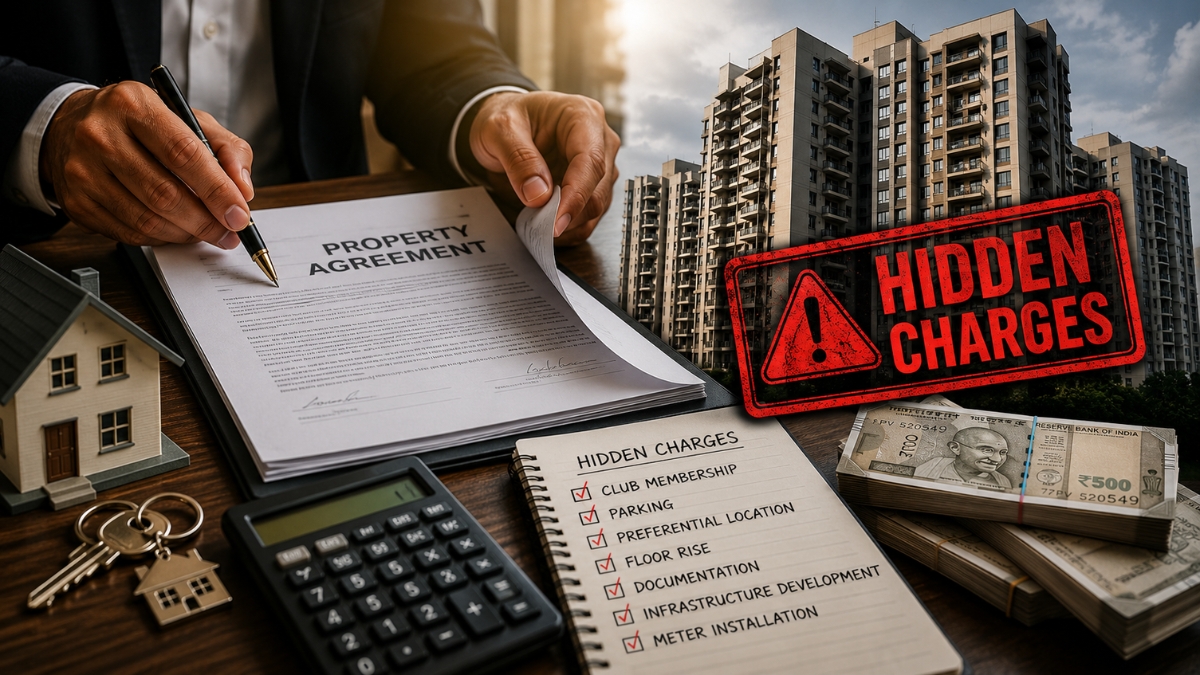
New Delhi, June 10, 2026: Buying a home is a dream for millions of Indians, but many buyers discover only at the final stage that the actual cost of a flat is much higher than the price advertised by the builder. Industry experts say several additional charges are often buried inside property agreements, increasing the overall cost by lakhs of rupees.
While some fees are legally permissible, others are builder-specific charges that homebuyers should understand before signing any document.
Here are seven hidden charges that frequently appear in property agreements and catch buyers by surprise.
1. Preferential Location Charge (PLC)
PLC is charged for flats located in what builders consider premium positions within a project, such as park-facing units, corner flats, higher floors or homes near amenities.
In many projects, PLC can increase the flat cost by 5% to 15%.
What buyers should know: PLC is legal, but it is not mandatory. Buyers should compare similar units before agreeing to pay the extra amount.
2. IFMS (Interest-Free Maintenance Security)
Builders often collect IFMS before possession, claiming it will be used for future maintenance of common areas and facilities.
What buyers should know: Ask for clarity on how the fund will be managed and transferred after residents take over the project.
3. Club Membership Charges
Luxury projects frequently advertise clubhouses, gyms and swimming pools, but access may come with a separate membership fee.
What buyers should know: Verify whether the charge is optional or compulsory. In some projects, club fees can run into lakhs of rupees.
4. Advance Maintenance Deposit
Many builders collect one or more years of maintenance charges in advance before handing over possession.
What buyers should know: This amount is separate from future monthly maintenance fees and should be factored into your budget.
5. Parking Charges
Parking fees remain one of the most debated costs in residential projects. Charges may vary depending on whether the slot is covered, open or located in a premium area.
What buyers should know: Confirm in writing whether parking is included in the quoted property price.
6. Legal and Documentation Fees
Some builders add charges for agreement drafting, documentation processing and administrative work.
What buyers should know: Request a detailed breakup. Buyers should be cautious about vague charges listed under "administrative expenses" or "processing fees."
7. Stamp Duty Delay Penalty Clauses
Property agreements often include penalty clauses for delays in registration or stamp duty payments.
What buyers should know: Missing deadlines can result in additional costs that many buyers overlook during the purchase process.
Why Homebuyers Should Read the Fine Print
Real estate consultants advise buyers to focus on the final payable amount rather than the advertised flat price. A seemingly affordable property can become significantly more expensive after additional charges are added.
Experts recommend reviewing the complete cost sheet, checking RERA disclosures and seeking legal advice before signing any agreement.
Bottom Line
For most families, buying a home is the largest financial commitment of their lives. Understanding hidden charges such as PLC, IFMS, maintenance deposits, club fees and documentation costs can help buyers avoid unexpected expenses and make better purchasing decisions.
Before signing your next property agreement, read every charge carefully—because the real cost of a flat is often hidden in the fine print.