
Thousands Live in Risk Zones Across Delhi NCR as Unsafe Buildings Become a Growing Concern
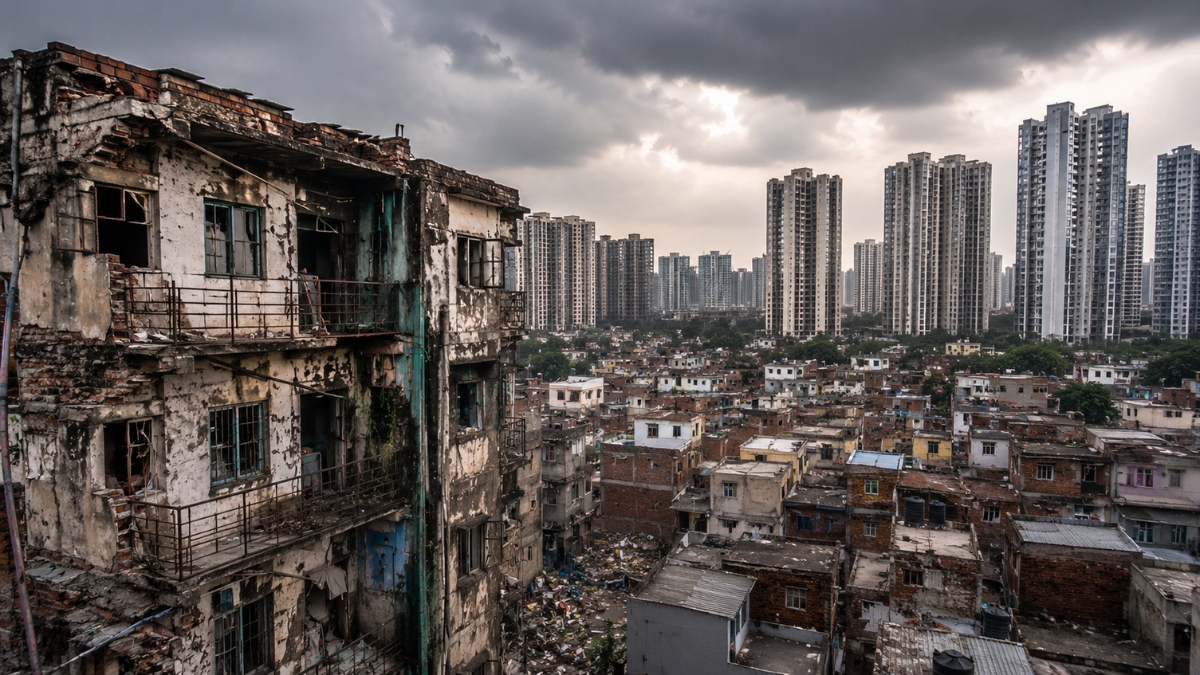
New Delhi, June 12, 2026: Every monsoon season brings the same question back into focus across Delhi-NCR — how many buildings are no longer safe for the people living inside them?
Recent inspections by civic authorities in several Indian cities have once again highlighted the growing challenge of ageing structures, illegal construction and poor maintenance. While Delhi-NCR continues to witness rapid urban growth, concerns are also rising about older residential colonies, unauthorized extensions and buildings that may no longer meet modern safety standards.
For residents, homebuyers and tenants, the issue is becoming increasingly difficult to ignore.
Why Unsafe Buildings Are Emerging as a Major Urban Challenge
Over the last two decades, NCR has expanded rapidly. New sectors, townships and apartment projects have transformed the region's skyline.
However, many older buildings were constructed under different regulations, while others have undergone unauthorized modifications over time. Additional floors, structural changes and neglected maintenance have increased risks in some locations.
During heavy rainfall, water seepage, foundation stress and ageing construction materials can further expose weaknesses in vulnerable structures.
Which Areas Face Higher Risk?
Unsafe buildings can be found in almost every major city, but the risk profile varies.
Older residential colonies, unauthorized developments and buildings with visible structural deterioration generally face higher safety concerns.
Areas Often Flagged for Structural Concerns
|
Location Type |
Risk Factors |
|---|---|
|
Old Residential Colonies |
Ageing structures |
|
Unauthorized Constructions |
Weak compliance |
|
Buildings with Added Floors |
Excess structural load |
|
Poorly Maintained Properties |
Water damage and corrosion |
|
Mixed Commercial-Residential Buildings |
Higher occupancy pressure |
The presence of these factors does not automatically mean a building is unsafe, but they often require closer inspection.
Five Warning Signs Every Resident Should Know
Most building failures do not occur without warning.
Experts often advise residents to watch for visible indicators that may signal structural problems.
Common Red Flags
- Large cracks in walls, beams or columns
- Exposed and rusting reinforcement steel
- Persistent water leakage
- Tilting walls or uneven floors
- Frequent falling plaster or concrete pieces
If multiple signs appear together, a professional structural audit may be necessary.
Why Homebuyers Should Pay Attention
Many buyers focus heavily on location, price and amenities while overlooking structural health.
A property that appears attractive on the surface may still face hidden maintenance or safety challenges. Before purchasing an older property, buyers should review approvals, maintenance records and, where possible, structural assessment reports.
This becomes even more important in buildings that are more than 15-20 years old.
What About Tenants?
Tenants often assume building safety is solely the owner's responsibility.
However, tenants are usually the first people exposed to risk if structural issues exist. Before signing a rental agreement, basic checks such as visible cracks, water damage and maintenance conditions can provide important clues about the building's overall health.
How Cities Are Responding
Across India, municipal bodies are increasing inspections of dilapidated structures, especially before the monsoon season.
Many cities now conduct annual surveys, issue notices and, in severe cases, order evacuations or demolitions. Authorities are also encouraging property owners to carry out structural audits and maintenance work to reduce risk.
As urban populations continue to grow, building safety is becoming as important as infrastructure expansion itself.
What Residents Can Do
While government inspections play a role, safety ultimately begins at the building level.
Residents' welfare associations, apartment owners and housing societies can reduce risks through regular maintenance, timely repairs and professional structural audits.
Preventive action is often far less expensive than emergency repairs after damage occurs.
The Grihik View
Delhi-NCR's growth story is often measured through expressways, airports and metro networks. But the region's future also depends on the safety of the buildings people already live in.
For homebuyers, tenants and housing societies, structural safety should no longer be treated as an afterthought. In 2026, knowing whether a building is safe may be just as important as knowing its location or market value.
As cities continue to grow vertically, the conversation around building safety is likely to become one of the most important urban issues of the decade.