
Government Plans 3D Printed Houses Under PMAY-U 2.0 in 3 Cities
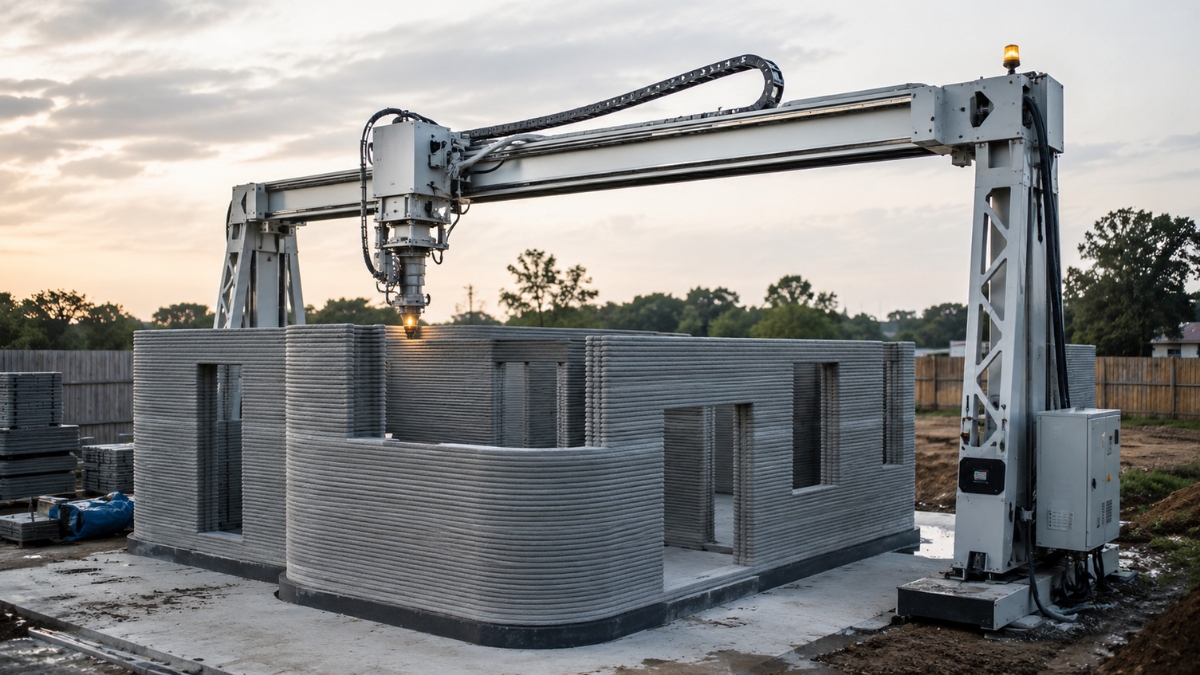
NEW DELHI | June 16, 2026 — The Centre is planning to roll out at least three demonstration housing projects using 3D Concrete Printing Technology under PMAY-U 2.0, with each project comprising a cluster of around 20 houses .
The projects are proposed in Goa, Nagpur and Thiruvananthapuram, and would mark the first use of 3D concrete printing in India's urban public housing sector .
Why This Matters
India's housing deficit could exceed 30 million units by 2030 . Traditional construction cannot meet this demand. 3D printing promises speed and reduced wastage, but cost remains a hurdle.
Currently, 3D-printed construction costs roughly ₹4,000 per sq ft, compared with around ₹2,000 per sq ft for conventional construction . The pilot projects are intended to test whether the technology can become affordable at scale.
3D Printing in India So Far
India has spent the past five years experimenting with 3D-printed construction:
-
2021: IIT Madras-incubated startup Tvasta built India's first 3D-printed house
-
2023: L&T completed a 3D-printed post office in Bengaluru in 43 days, compared to 6-8 months conventionally
-
October 2025: CSIR-CBRI unveiled India's first 3D concrete-printed rural house under PMAY-Gramin
Limitations of the Technology
The technology currently cannot support high-rise construction. At present, only G+1 structures can be constructed, which limits its applicability in large cities where vertical housing is essential .
IIT Madras professor Ravindra Gettu, who participated in the Bengaluru post office project, remains skeptical about near-term use in affordable housing. He noted that the post office project's benefits were speed and aesthetics because it involved a curved structure .
What Experts Say
Ajay Chaurasia, chief scientist at CSIR-CBRI, argued that recent innovations have addressed one major drawback — reliance on cement-intensive concrete mixes. The Roorkee project substituted cement with fly ash and sugarcane bagasse ash, reducing both costs and carbon footprint .
However, regulatory uncertainty is a bigger obstacle. India currently lacks dedicated national standards for 3D-printed buildings and no established quality-control protocols .
Global Context
Dubai has mandated that 25% of all new buildings use 3D-printing technology by 2030. The World Bank estimated that 3D printing could reduce construction costs and timelines by around 15% globally .
What Buyers Should Know
These are pilot projects, not mass housing yet. The government is testing technology, not rolling it out for homebuyers immediately. However, if costs come down, this could change affordable housing delivery in India within 5-7 years.