
Bengaluru BDA Apartments Face EV Charging Gap as Ownership Rises
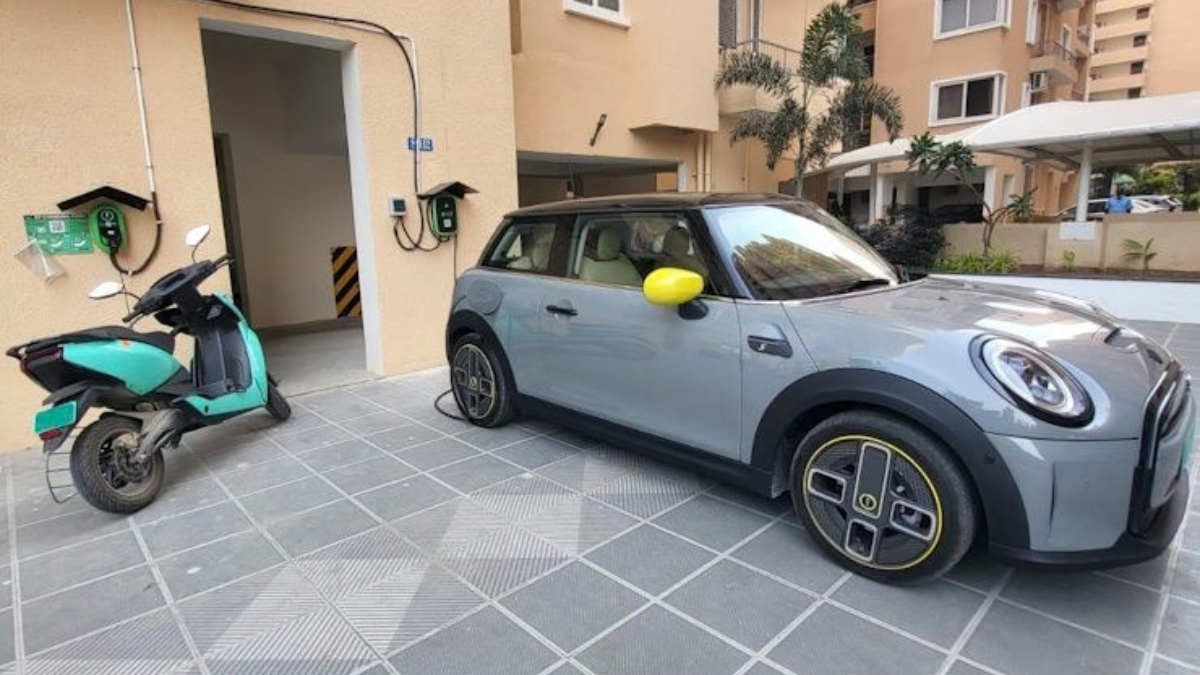
Bengaluru | September 30, 2026: Electric vehicle ownership is growing across Bengaluru’s residential communities, but charging infrastructure in Bangalore Development Authority (BDA) apartments is struggling to keep pace. A survey covering 5,000 flats across 15 BDA complexes found that only one had an operational community charging facility, despite 61% of surveyed residents already owning an EV.
The findings highlight a growing concern for apartment residents and prospective homebuyers: access to convenient EV charging is becoming an important part of residential infrastructure.
EV Ownership Has Outpaced Apartment Charging Facilities
The BDA Apartment Owners’ Forum conducted the survey in August to assess EV ownership and charging requirements across its 15 residential complexes.
Of the residents surveyed, 61% already owned an electric vehicle. Among EV-owning households, 70% had only an electric two-wheeler, 20% owned both an electric two-wheeler and a four-wheeler, while 10% had only an electric four-wheeler.
Despite this adoption, just one of the 15 surveyed complexes had an operational community charging facility.
Residents Depend on Public and Personal Charging
With shared charging infrastructure largely unavailable, residents have adopted different ways to charge their vehicles. The survey found that 41% relied on public or commercial charging stations, while 28% used regular home sockets and 17% charged their vehicles at workplaces.
Only 11% had a dedicated charger at their parking space, while 2% used battery swapping.
The shortage of dedicated charging points was the biggest reported challenge, cited by 51% of respondents. Other concerns included the lack of covered parking and parking spaces located far from electrical connections.
Demand for Community Charging Is Already High
The survey indicates that residents want charging facilities within their apartment complexes. Among those surveyed on expected usage, 56% said they would use community chargers daily, while 33% expected to use them three to five times a week.
Another 11% anticipated using the facilities once or twice a week. Overall, 89% expected to use community charging at least three times a week.
These responses point to regular demand rather than occasional use, making the availability and capacity of shared charging facilities important considerations for apartment management.
Future EV Buyers Could Increase Infrastructure Pressure
The survey also found strong interest among residents who do not yet own an EV. All respondents in this group said they were considering purchasing one within the next two years.
Among prospective buyers, 56% preferred an electric four-wheeler, compared with 37% who favoured a two-wheeler. The remaining respondents had not specified a vehicle type.
The preference for four-wheelers has implications for infrastructure planning, as apartment complexes may need charging systems capable of supporting different vehicle types and higher power requirements.
BDA Signals Plans to Expand Charging Facilities
A senior BDA official told The Times of India that the authority intends to provide EV charging stations in its apartments. The official also said the BDA chairperson had asked officials to take up charging projects in existing residential complexes.
The BDA Apartment Owners’ Forum has urged the authority to improve charging infrastructure and facilitate the necessary approvals, particularly in projects that remain under its control.
However, the authority has not provided a specific completion timeline for installing charging stations across the surveyed complexes.
What This Means for Bengaluru Homebuyers
For homebuyers considering BDA apartments, EV charging availability could become an increasingly relevant factor in evaluating residential amenities. Buyers who already own an EV or plan to purchase one should check whether their prospective apartment has shared charging facilities, provisions for individual chargers and adequate electrical capacity.
For existing residents, the survey highlights the need for coordinated planning between apartment associations and the BDA. Installing chargers will require attention to parking arrangements, electrical connections and the expected number of users.
As EV ownership grows, the availability of reliable charging infrastructure could increasingly influence the convenience and long-term appeal of residential communities.
What Happens Next
The BDA has indicated that it plans to take up EV charging projects in existing apartments, but implementation details and timelines remain unclear.
The survey provides the authority with information on current ownership, charging habits and future demand. Whether this translates into faster installation will depend on project planning, electrical infrastructure and coordination with apartment communities.