
Tier-2 Cities Outpace Top Metros as Housing Prices Rise 63% in Five Years
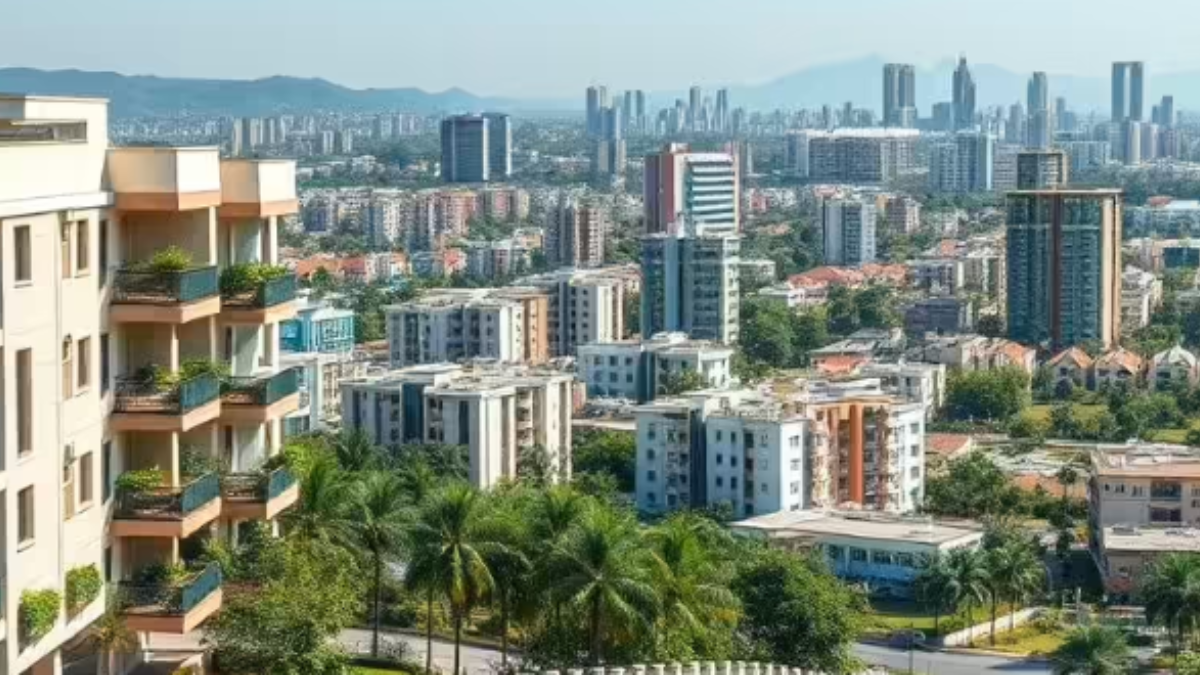
New Delhi | September 19, 2026: Housing prices across 11 emerging Tier-2 real estate markets have increased 63% between 2021 and 2026, significantly faster than the 42% rise recorded across India’s top eight cities, according to a CII-Knight Frank India report released at the CII Real Estate Conference.
The report points to a major shift in India's residential market as cities such as Goa, Lucknow, Bhopal, Indore, Jaipur, Kochi, Nagpur, Visakhapatnam and Coimbatore gain from better infrastructure, stronger connectivity, rising consumption and expanding economic activity.
For buyers and investors, the trend shows that some smaller urban markets are no longer simply lower-cost alternatives to major metros. Their property markets are developing their own demand drivers.
Tier-2 Housing Prices Show Faster Growth Than Top Cities
The CII-Knight Frank report, titled India's Next Real Estate Markets, covers 11 emerging Tier-2 markets:
- Bhopal
- Bhubaneswar
- Chandigarh Tricity
- Goa
- Indore
- Jaipur
- Kochi
- Lucknow
- Nagpur
- Visakhapatnam
- Coimbatore
Residential prices across these markets recorded an average 8% CAGR between 2016 and 2026, compared with 4% across the top eight cities — Mumbai, Bengaluru, Delhi-NCR, Hyderabad, Chennai, Pune, Ahmedabad and Kolkata.
The difference became more pronounced in the past five years, with the 11 emerging markets registering 63% price growth versus 42% in the top eight cities.
Infrastructure Is Changing Property Demand
The report attributes the stronger momentum to improving economic fundamentals, infrastructure development, better connectivity and rising consumption.
As roads, transport networks, utilities and other urban infrastructure improve, more Tier-2 locations are becoming viable for both residents and businesses.
This can create a wider property demand base, particularly when infrastructure improvements are accompanied by employment generation and commercial activity.
Prices Range From ₹4,500 to ₹13,500 Per Sq Ft
Average residential prices across the identified Tier-2 markets currently range between ₹4,500 and ₹13,500 per sq ft, according to the report.
However, the report highlights that these markets cannot be treated as one uniform property category.
Demand can vary significantly depending on the economic role of each city. Technology and services hubs may see housing demand around employment corridors, while industrial centres can develop around manufacturing clusters. Tourism-driven markets can attract premium housing and second-home demand.
Post-Covid Buyers Are Moving Towards Integrated Communities
The pandemic and the rise of hybrid working have also changed residential preferences in emerging cities.
According to the report, buyers in Tier-2 markets are increasingly moving away from standalone buildings and conventional housing formats towards integrated, amenity-led communities.
Greater flexibility around where people work has also expanded the choice of residential locations for some households.
This shift could increase demand for projects that combine housing with amenities, community spaces and better connectivity rather than focusing only on the individual dwelling.
Tier-2 and Tier-3 Cities Could Become a Major Real Estate Growth Engine
The report estimates that India's real estate sector could reach $5.8 trillion by 2047, with Tier-2 and Tier-3 cities potentially contributing 25–30%, equivalent to around $1.4–1.7 trillion.
But the report also stresses that infrastructure alone will not be enough.
Emerging cities would need:
- Employment-generating infrastructure
- Demand-led formal housing supply
- Serviced land
- Efficient approval systems
- Reliable utilities
- Better urban infrastructure
- Liveable city conditions
The ability to convert infrastructure and connectivity into sustained economic activity will therefore be an important factor in the development of these property markets.
Commercial Growth Is Supporting Residential Markets
The expansion is not limited to housing.
The report said the identified Tier-2 markets recorded 11.2 million sq ft of warehousing leasing in 2025, with six of the emerging markets accounting for 5.3 million sq ft.
Meanwhile, 24 Tier-2 cities accounted for 36 million sq ft of India's 134 million sq ft organised shopping-centre stock in 2025.
Growing warehousing, retail and business activity can strengthen the employment and consumption base that supports residential demand.
What This Means for Property Buyers and Investors
The 63% price increase shows that smaller cities can deliver substantial housing-price growth when infrastructure, connectivity and economic activity improve together.
But the data does not mean every Tier-2 city or locality will perform similarly.
For buyers and investors, the more important checks are likely to be:
- Whether infrastructure is operational rather than only announced
- Availability of employment and commercial activity
- Existing and planned connectivity
- Water, sewage and other civic infrastructure
- Rental and end-user demand
- New housing supply in the surrounding area
- Local price levels compared with household incomes
The report's broader message is that the next phase of India's real estate expansion may increasingly depend on cities that can combine connectivity, employment, population growth, consumption and urban capacity rather than infrastructure announcements alone.