
Powai Residents Demand Better Infrastructure Before More Mega Projects
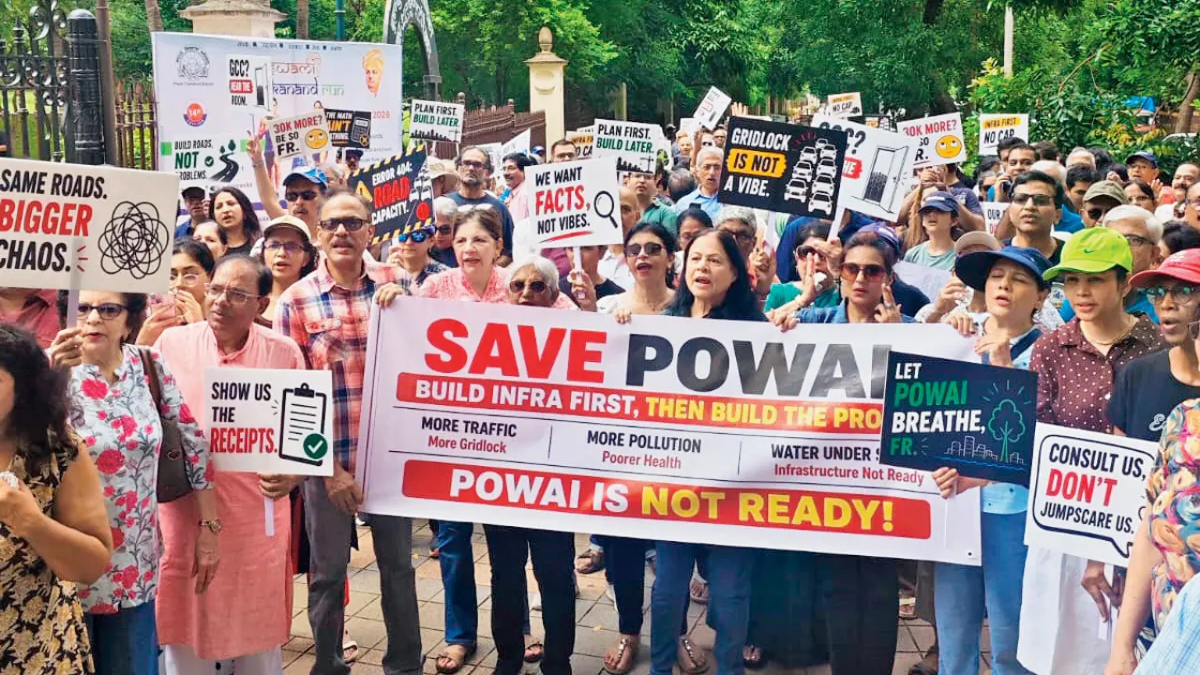
Mumbai, Maharashtra | September 1, 2026: Residents of Powai and Chandivali in Mumbai have protested against several proposed large-scale developments, demanding that civic infrastructure be upgraded before authorities approve or allow more major projects in the area.
The protest, organised by the Powai Action Forum, focused on concerns over traffic, roads, parking, water supply, sewage, emergency access and environmental impact. Around 600–700 people reportedly participated, while other reports put the turnout higher.
Residents Raise Concerns Over 30,000-Seat GCC
The proposed 30,000-seat Global Capability Centre (GCC) has emerged as a major point of concern.
The project, being developed by BGRE in partnership with the state government, is expected to accommodate around 30,000 employees, with an investment proposal of approximately $1 billion.
Residents fear the GCC, along with other developments in Powai and Chandivali, could put further pressure on an already congested road network.
According to estimates cited by the residents' forum, the projects together could generate 20,000–25,000 additional vehicle movements and around 100,000 daily trips through the area.
Traffic and Emergency Access Among Key Issues
Residents said existing roads and parking facilities may not be sufficient to handle the additional traffic.
They are particularly concerned that a shortage of parking could push vehicles onto internal roads, residential streets and footpaths.
The residents also warned that severe congestion could affect ambulance and fire-tender movement, including access to Hiranandani Hospital.
For people living in the area, the concern is therefore not limited to longer travel times but also the potential impact on emergency services and everyday mobility.
Residents Want Projects Assessed Together
The Powai Action Forum has called for a cumulative impact assessment covering existing, approved and proposed developments in Powai and Chandivali.
Instead of examining individual projects separately, residents want authorities to assess their combined impact on:
- Traffic and roads
- Parking
- Water supply
- Sewage and drainage
- Emergency access
- Environment
- Public infrastructure
The demand reflects concerns that the area's infrastructure could be overwhelmed if multiple large projects become operational at the same time.
Several Road Projects Are Still Pending
Residents have also pointed to unfinished connectivity projects in the area.
One example is the 90-foot Development Plan road in Chandivali, which was planned decades ago and for which the BMC floated a tender in 2023.
Other proposed road links connecting Chandivali with Powai and Sakinaka with the Jogeshwari-Vikhroli Link Road (JVLR) are also yet to begin, according to residents.
They want these infrastructure projects to progress before additional large developments place further pressure on the existing network.
Environmental Impact Also Raises Concern
Residents have raised environmental concerns over proposed development, including hill cutting and its potential impact on flooding and landslide risks.
Questions have also been raised regarding environmental clearances and the transparency of environmental impact assessment documents.
Powai's ecological assets, including Powai Lake, have added another dimension to the debate over how much new development the area can accommodate.
Developer Says It Will Engage With Residents
BGRE has said it is committed to Powai's well-being and intends to focus on green spaces, sustainable mobility and community engagement.
The company has also said it respects residents' concerns and will continue discussions with the community and other stakeholders, while maintaining that its projects are being developed with the required statutory approvals and applicable guidelines.
Why This Matters for Powai Property Owners
Powai is already an established residential and commercial market, and major employment projects can potentially increase demand for homes, rentals, retail and commercial services.
However, infrastructure capacity is equally important for property values and liveability.
Better roads, drainage, water supply, public transport and emergency access can support long-term property demand, while infrastructure bottlenecks can affect commuting, quality of life and the attractiveness of an area.
For existing residents and prospective buyers, the outcome of the infrastructure debate could therefore have a direct bearing on Powai's future development pattern.
What Happens Next
Residents are seeking a public hearing where their concerns can be formally considered before the proposed developments move ahead.
The key issue now is whether authorities will address the area's existing infrastructure gaps and conduct a broader assessment of the combined impact of new projects.
The debate in Powai highlights a wider real estate question: large developments can bring jobs and investment, but their long-term success depends on whether surrounding civic infrastructure grows at the same pace.