
US Homebuilders Face Deeper Discounts as 2027 Marketing Shifts Toward Serious Buyers
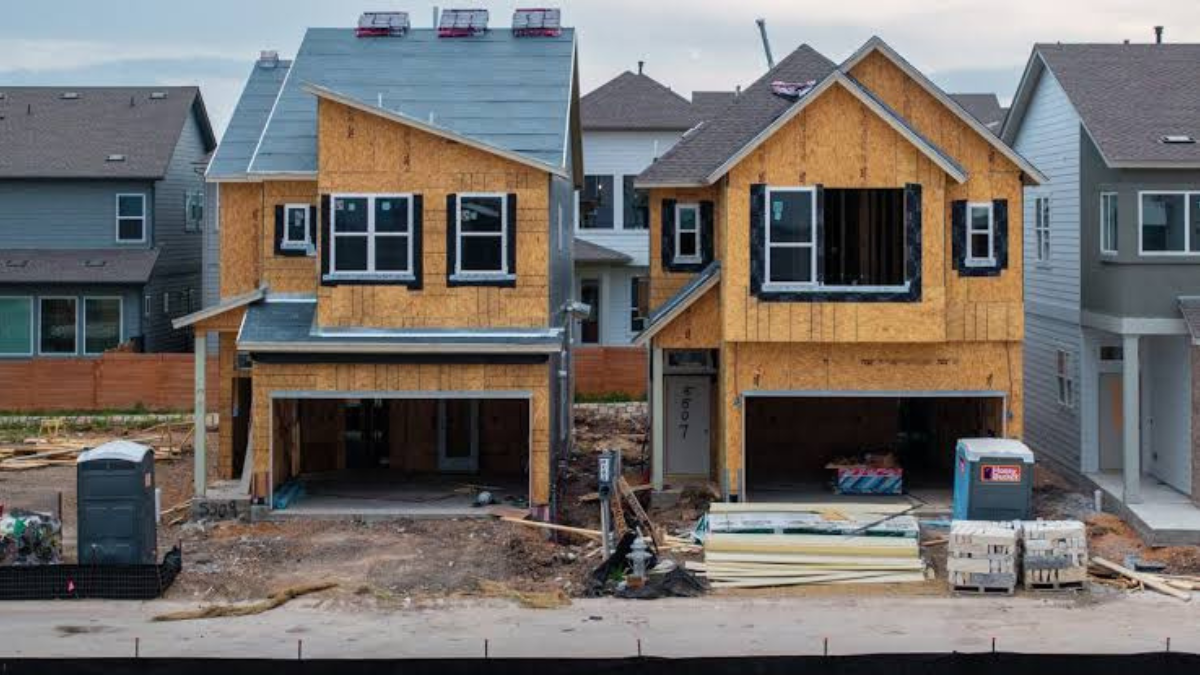
United States | September 26, 2026: US homebuilders are entering 2027 planning with a more challenging sales environment, as buyers remain cautious and discounts become increasingly common. New data from Audience Town, covering more than 201,000 home sales across 25 markets, shows that builders sold homes below asking price in every market analysed.
The findings point to a changing strategy for developers: instead of relying primarily on website traffic and lead volumes, builders are focusing on identifying financially prepared buyers and converting them into actual sales.
Builder Discounts Are Widespread Across US Markets
Audience Town's analysis of sales during the 12 months ending in August 2026 found that homes sold below asking price in all 25 markets studied.
The extent of discounting varied considerably. In Kansas City, 47% of homes sold below asking price, while the figure reached 92% in Celina, Texas, north of Dallas. Homes in Celina also took a median of 105 days to sell, making it the slowest market in the analysis.
Texas markets recorded particularly high levels of discounting. Only 18% of new homes in Texas metropolitan areas sold at or above asking price, compared with 24% in Florida, 25% in the Southeast and West, and 42% in the Midwest.
Builders are increasingly using price reductions, mortgage rate buydowns and closing-cost incentives to attract buyers.
Texas Markets Face Greater Pricing Pressure
The report highlights the relationship between local competition, inventory and builder pricing strategies.
In markets with a high concentration of large publicly traded builders, discounting was often more prevalent. These companies generally have greater financial capacity to offer incentives than smaller regional builders.
Texas stood out even among markets dominated by national builders. In areas where national builders accounted for at least 60% of the market, only 6% of homes in Texas sold at or above asking price, compared with 27% in similar markets outside Texas.
The report points to substantial housing development in suburbs north of Dallas and west of Houston as a possible contributor to the pricing pressure.
For buyers, these conditions may create opportunities to negotiate on price or financing incentives, although the benefits will vary by property and builder.
Existing Homeowners Account for Most Buyers
Audience Town's analysis of 47,373 recorded home sales across seven markets between January and September 2026 found that more than 90% of buyers already owned a home.
Around 45% had lived in their existing homes for at least a decade. Nearly half owned properties valued between $250,000 and $500,000, potentially providing substantial equity to finance their next purchase.
Although almost half of buyers earned less than $100,000, 33% had a net worth exceeding $1 million, while 22% had a net worth above $2.5 million.
The findings suggest that existing equity and accumulated savings are important sources of purchasing power. First-time buyers without home equity face a different affordability challenge.
Buyers Are Giving Up Low Mortgage Rates to Move
Despite mortgage rates remaining elevated, some homeowners are moving even when it means giving up historically low borrowing costs.
Among the most recent 3,499 sales in the dataset, 23.9% of sellers had mortgage rates between 2% and 3%, while another 25.8% had rates between 3% and 4%.
Together, nearly half of these sellers were leaving mortgages with rates below 4%.
The data suggests that the mortgage rate lock-in effect has not stopped every homeowner from moving. Personal and professional circumstances can still motivate households to sell and purchase another property.
For builders, this means that marketing strategies may need to account for homeowners who have substantial equity but are reluctant to exchange their existing mortgage for a more expensive loan.
Home Tours Are Becoming a Critical Sales Milestone
The report found that buyers typically spend between 76 and 159 days researching before visiting a homebuilding community. Once they take a tour, a sale often follows within a few weeks.
This makes the transition from online research to an in-person visit an important stage in the buyer journey.
Organic search accounted for 45.9% of first website visits, but its share fell to 39.8% on the final visit before a tour. Direct traffic increased from 14.3% of first visits to 24.7% of final pre-tour visits.
The figures suggest that while search helps buyers discover projects, repeat engagement and brand recognition become increasingly important as they approach a purchase decision.
AI Traffic Adds a New Channel for Builder Marketing
AI-assisted visits to homebuilder websites increased twelvefold in 2026 compared with 2025, reaching 111,700 monthly sessions in July 2026, according to Audience Town.
Around 95% of builders received some AI-driven traffic, indicating that artificial intelligence is becoming a more prominent channel through which buyers discover homes.
For builders preparing their 2027 marketing budgets, the data raises questions about how to measure the quality of website visits, identify serious prospects and allocate spending across traditional search, direct traffic and AI-assisted discovery.
What Builders Should Watch in 2027
The report identifies several challenges that could continue to influence the US housing market, including elevated mortgage rates, construction cost pressures, inflation, consumer confidence and labour-related uncertainty.
For developers, the findings point to the importance of measuring local market conditions rather than relying exclusively on national benchmarks. Pricing, incentives and marketing strategies may need to reflect the specific competition and buyer profile in each market.
The key questions for 2027 are whether builders understand their local discounting trends, which channels bring in buyers already familiar with their projects, and how much of their reported website traffic represents genuinely engaged prospects.
As competition for buyers continues, the ability to convert interested households into property tours and completed sales will remain central to homebuilder marketing strategies.