
Delhi Tightens Construction Pollution Rules With Dust Portal 2.0
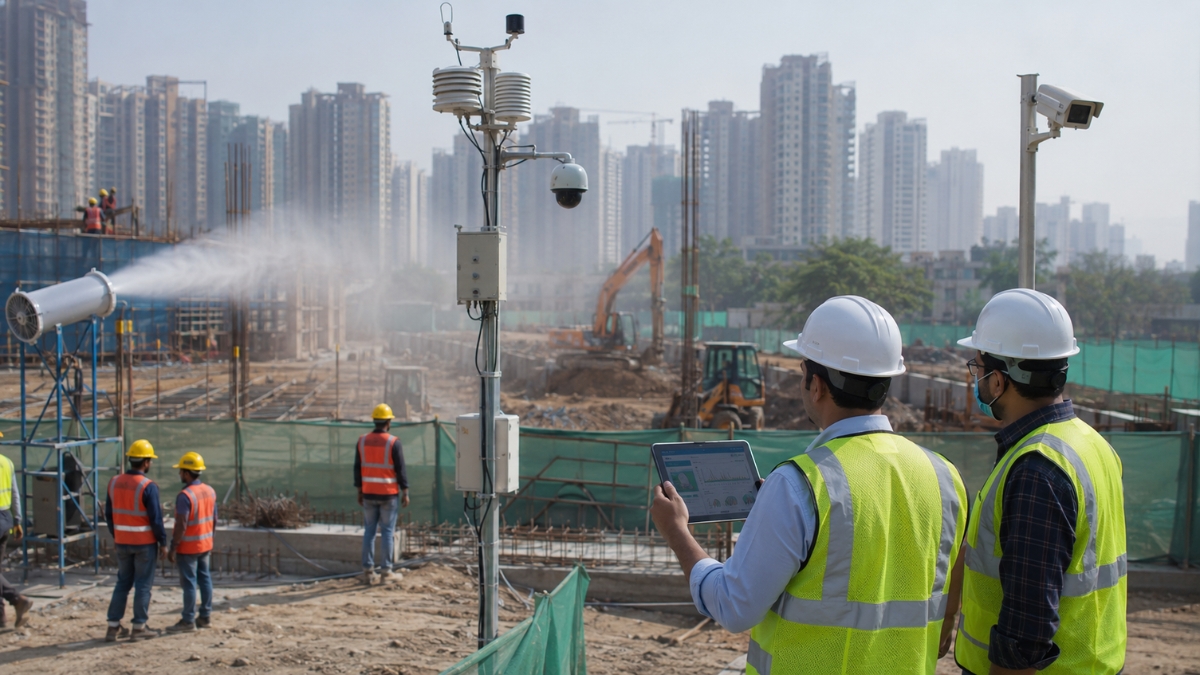
NEW DELHI | July 9, 2026: The Delhi Pollution Control Committee (DPCC) has introduced Dust Portal 2.0, a technology-driven platform aimed at improving monitoring of dust pollution from construction and demolition projects across the capital.
Under the new system, construction sites meeting the prescribed criteria will have to submit regular self-audit reports, install air quality monitoring equipment and allow authorities to remotely monitor project sites through live CCTV feeds.
The initiative follows directions issued by the Commission for Air Quality Management (CAQM) to strengthen pollution control at construction sites.
Which Construction Projects Will Be Covered?
The new rules apply to construction and demolition projects with a plot area of 500 square metres or more.
Such projects must register on Dust Portal 2.0 and complete a one-time GIS-based mapping of their site boundaries before accessing the platform's compliance dashboard.
What Will Builders Have to Do?
Registered project proponents will now be required to:
- Submit a Self-Audit Assessment Report every 15 days.
- Install PM2.5 and PM10 air quality sensors.
- Provide live CCTV feeds for remote monitoring.
- Upload photographs and supporting compliance documents.
- Digitally map project boundaries using GIS technology.
The portal is designed to digitise compliance and improve transparency in pollution monitoring.
12-Point Compliance Checklist Introduced
The self-audit report will assess projects on 12 pollution-control measures, including:
- Green net covering around construction sites.
- Water sprinkling to control dust.
- Covering of construction materials.
- Vehicle tyre-washing facilities.
- Anti-smog gun installation.
- Air quality monitoring sensors.
- CCTV surveillance.
- Construction waste management.
- Worker awareness measures.
Authorities have warned that delayed or incomplete submissions could result in show-cause notices.
Anti-Smog Guns Based on Project Size
Dust Portal 2.0 will also automatically determine the number of anti-smog guns required based on the built-up area of a project.
For example:
- 5,000–10,000 sq m: Minimum one anti-smog gun.
- More than 20,000 sq m: Minimum four anti-smog guns.
This automated calculation is intended to standardise compliance across construction sites.
What Does This Mean for Homebuyers?
While the portal is primarily aimed at builders and contractors, homebuyers may also benefit from improved environmental compliance at construction sites.
Stricter monitoring could help reduce dust emissions around residential neighbourhoods and encourage developers to follow prescribed pollution-control measures throughout construction.
The Bottom Line
With Dust Portal 2.0, Delhi is moving towards technology-based monitoring of construction pollution. By combining GIS mapping, air quality sensors, live surveillance and regular self-audits, the new system aims to improve compliance while strengthening oversight of construction activities across the capital.