
Most Homebuyers Throw Away These Documents. Later, They Struggle to Win Property Disputes
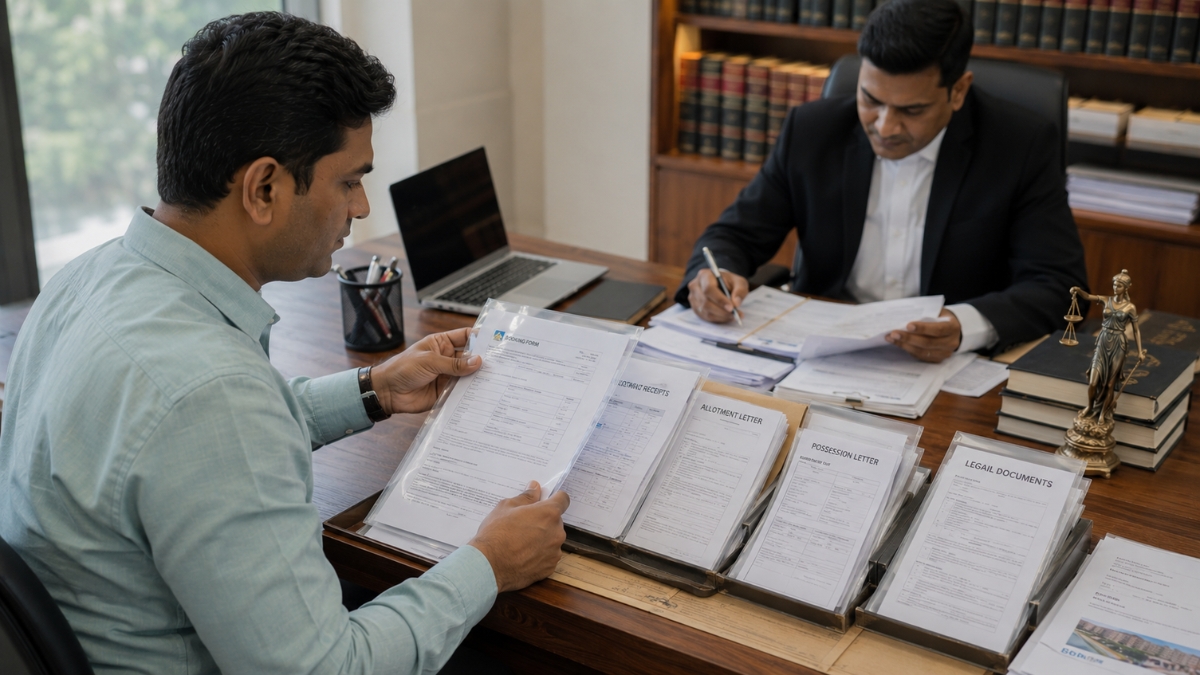
June 27, 2026: A property dispute rarely begins in a courtroom. It usually starts much earlier—when an important receipt goes missing, an email is deleted or a document is misplaced.
Many homebuyers focus on booking a flat but pay little attention to maintaining proper records. Years later, if a disagreement arises over possession, payments or project commitments, those missing documents can make it much harder to establish the facts.
Instead of collecting papers only when a dispute begins, it is far better to build a complete property file from day one.
Quick Guide
Before and after booking a flat, keep every important document in one secure place.
The stronger your records, the easier it becomes to explain your case if any issue arises in the future.
Documents You Should Never Lose
Every homebuyer should preserve:
- Booking application and acknowledgement
- All payment receipts
- Allotment letter
- Builder-buyer agreement
- Demand letters issued by the developer
- Email conversations and official messages
- Payment transaction proofs
- Possession letter and handover documents
- Maintenance-related communications
- Any written commitment made by the builder
Keeping both digital and printed copies is a good practice.
Why Written Records Matter More Than Verbal Assurances
Sales representatives often explain project details during meetings or phone calls. While these conversations may be helpful, written communication generally provides a more reliable record if there is any future disagreement.
Whenever possible, important discussions should be confirmed through email or official communication channels.
Build a Homebuyer File
Instead of storing documents in different places, create a dedicated property folder.
You can divide it into sections such as:
- Booking
- Payments
- Agreements
- Construction Updates
- Possession
- Maintenance
This simple habit can save significant time if documents are needed later.
A Small Habit That Can Prevent Bigger Problems
Many buyers only begin searching for documents after receiving a legal notice or facing a dispute.
By then, receipts may be lost, phones changed or emails deleted.
Keeping records organised from the beginning is much easier than trying to recreate them years later.
Grihik Insight
Buying a home involves paperwork that continues long after the booking amount is paid. Treat every property document as part of your investment, not just as a formality. A well-maintained record can make future discussions with developers, banks or authorities much smoother.
Final Word
Property documents are not just files—they are your ownership journey in writing. Preserving them carefully is one of the simplest yet most effective ways to stay prepared for any future issue, while also making resale, loan processing and ownership verification much easier.